
Why Storm Boelo left Cleveleys seafront covered in a blanket of sea foam

Sea foam whipped up during the recent storms - but what causes it?
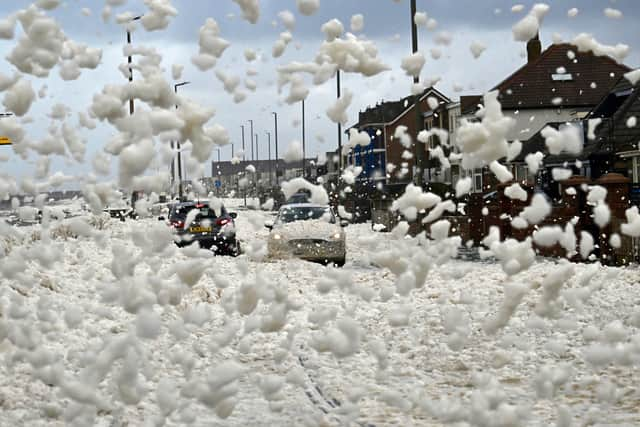
As Storm Boelo battered the coast on Sunday, a thick blanket of white sea foam formed along Cleveleys beach with the striking sight returning yesterday as more powerful winds and high tides continued to lash the shoreline.
The unusual phenomenon is a familiar sight on the stretch of coastline at North Promenade, where the right combination of strong winds and high tides can whip the froth into the air like snow.
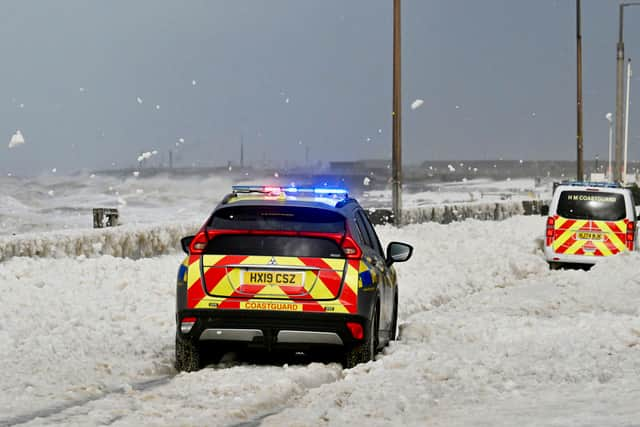

Social media has been awash with footage of the striking spectacle, with people fascinated by the sight and wondering where the foam comes from.
But while it may look extraordinary, the science behind it is entirely natural – and the conditions have to be just right.
Why does sea foam form?
Sea foam forms when seawater becomes filled with tiny air bubbles, usually as waves crash against the shore and churn up the water.
Seawater also contains organic matter, including algae, seaweed and tiny particles from marine life. These substances help stabilise the bubbles, allowing them to cling together and form the familiar frothy foam.
What conditions are needed?
Sea foam is particularly common after storms or during periods of strong winds, when powerful waves churn the water and bring organic material to the surface.
When these conditions coincide with high tides, large amounts of foam can accumulate along the shoreline before being swept or blown across beaches, rocks and even nearby roads.
Although sea foam can look unusual, it is generally a natural part of the marine environment.
All the latest news and top stories from across Blackpool and the Fylde coast directly to your phone
Never miss a thing.Click here to join
Is it a natural phenomena or is it pollution?
The Wildlife Trust said the foam that washes in, particularly when the weather gets stormy, is completely natural.
A spokesperson said: “It is all to do with the natural materials in the water. “The sea water has lots of different parts in it and part of that can be algae.
“When the algae starts decaying you get something called ‘algal bloom’. That’s a normal thing. The consistency of the matter increases and that’s what is washing up.”
“Nothing has changed in the composition of the water, it’s just the stormy weather that results in it all being churned up to the surface and it’s blowing ashore.
“It happens everywhere, not just in the Irish Sea. It’s not at all harmful to animals, marine life or humans.”