
'Giselle was badly let down' - Grieving Wesham husband says mental health crisis care is too slow

“Giselle was badly let down. She just didn’t get the specialist help she needed, and in the end, it was down to me to try and keep her feeling positive and safe, which, in reality, I wasn’t able to do. I didn’t know if what I was doing or saying to her was right.”
A man whose wife died of an overdose says mental health care on the Fylde coast is ”too slow for people in crisis and needs to change”.
Giselle Monro, 56, of Wesham took an overdose of her prescribed medication for depression and anxiety and was found unresponsive in bed by her husband of 33 years, Allan, on the morning of October 17 last year.
For the previous two months, the couple had sought the support of mental health specialists at Lancashire & South Cumbria NHS Foundation Trust, with Giselle having confided to Allan that she had escalating thoughts of self-harm and suicide.
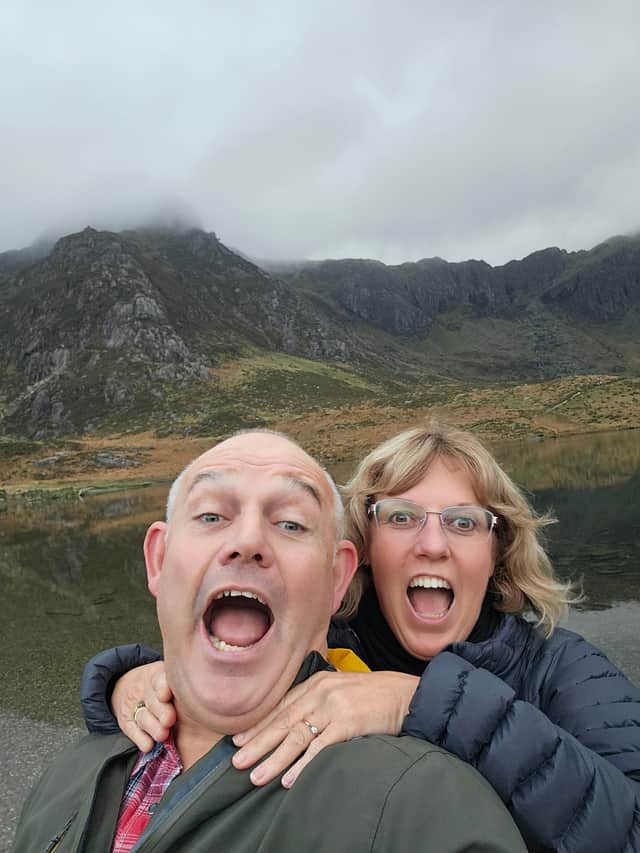

A subsequent review of the care provided to her, following her death, said she had presented with a ‘significant increase in symptoms over a number of weeks’ including anxiety, self-harm, suicidal thoughts and evidence of low mood, paranoia, and distress.’
It identified ‘multiple instances of missed opportunities to refer her for more intensive support and assessment.’
This included an urgent assessment on September 20, 2025, after Giselle had called for help and said that she had self-harmed.
Given she had talked to Allan about suicide that morning, had used an item which ‘had the potential to cause significant and life-threatening injuries,’ and as she had history of two similar incidents in 2005 and 2016, the review said she should have been classed as being ‘in crisis’.
This should have triggered an urgent referral to the Home-Based Treatment Team (HBTT), but, as Giselle claimed to no longer be feeling suicidal, she was allowed to stay at home and couple were told to attend A&E should they feel it necessary.
All the latest news direct to your inbox
Two further assessments were identified as missed opportunities to intervene, including a Community Mental Health Team assessment on October 9, when Giselle’s previous history and past risk was again not fully considered.
Finally, at a Clinical Discussion Meeting on October 15 – just two days before Giselle overdosed - a decision was taken, without any evidence of having reviewed full documentation and history - not to refer her to the Community Mental Health Team. This decision was not communicated to Giselle.
The review said her suicidal thoughts had been considered to be ‘passive’, and she was signposted to access talking therapies to help with her negative thinking.
‘Too difficult to access specialist support’
Giselle’s husband Allan says he feels support was ‘too difficult’ to access, and that a lot of pressure was placed back on his shoulders as her husband.
“Giselle was badly let down. She just didn’t get the specialist help she needed, and in the end, it was down to me to try and keep her feeling positive and safe, which, in reality, I wasn’t able to do. I didn’t know if what I was doing or saying to her was right,” he said.
“She had suffered with her mental health for quite some time and was always very self-critical and would often put herself down. As a family, we tried to be positive and encourage her to try and feel better.
“I think a lot of pressure is placed on loved ones to protect people who are increasingly struggling with their mental health. It felt like the NHS looked at me as being her protector, but I wasn’t qualified to do that.
“If she’d been single and didn’t have me at home, perhaps she would have been assessed differently and given better support.
“It was only after she died that I realised the amount of pressure I’d been under and how much I’d taken on my shoulders. I never saw it like that at the time because I was her husband, I loved her and would do anything for her. But we both needed more specialist support.
“I did the best I could. I tried not to leave her alone for too long and to keep her occupied and her mind busy, as when she had time to think, she’d start to think about harming herself.
“She didn’t get the help she needed. When somebody is in a mental health crisis, it needs to be escalated quickly. I think there are too many assessments, processes and stages when there should be a fast-track way of getting people the help they need immediately. It’s too slow for people in crisis and needs to change.
“Giselle isn’t the only one. I’ve met other people since who have lost their loved ones and say they repeatedly appealed for more help which they didn’t get.”
Enjoy unlimited access to local news, the latest football stories and new puzzles every day
With a digital subscription, you can see fewer ads, enjoy faster load times, and get access to exclusive newsletters and content. Click here to subscribe
‘She was the love of my life’
Mr Monro says he is doing his best to move on with life without his partner of 40 years – as she mistakenly believed a life on his own would be better for him.
“I found a note in which she suggested that she felt I’d have a better life without her, as she clearly felt like she was a burden. She wasn’t at all. She was the love of my life from the moment I met her when she was just 16,” he said.
“We had 40 years together and enjoyed so many great times. She loved going on holidays, camping and bike riding. We had some wonderful times in Scotland, Devon, Dorset and Wales.
“She wasn’t just a wonderful wife to me, she was a lovely mum, sister and auntie, and a really friendly and caring person. She got on with people so easily and was well liked by her colleagues throughout her career. She loved working in hospitality and spent more than 20 years working in the industry.
“She meant so much to so many people, not just to me and our family. She had a lovely way about her and people were naturally drawn to her.
“She is missed terribly by her loved ones, her friends and her former work colleagues, and by many other people whose lives she touched. We try to remember the joy she brought to so many people’s lives. She could enjoy life to the full, but sadly she couldn’t win the battle with her mind.
“I’m doing my best to carry on without Giselle, although I’ve been left very lonely and without my best friend and partner of 40 years.”
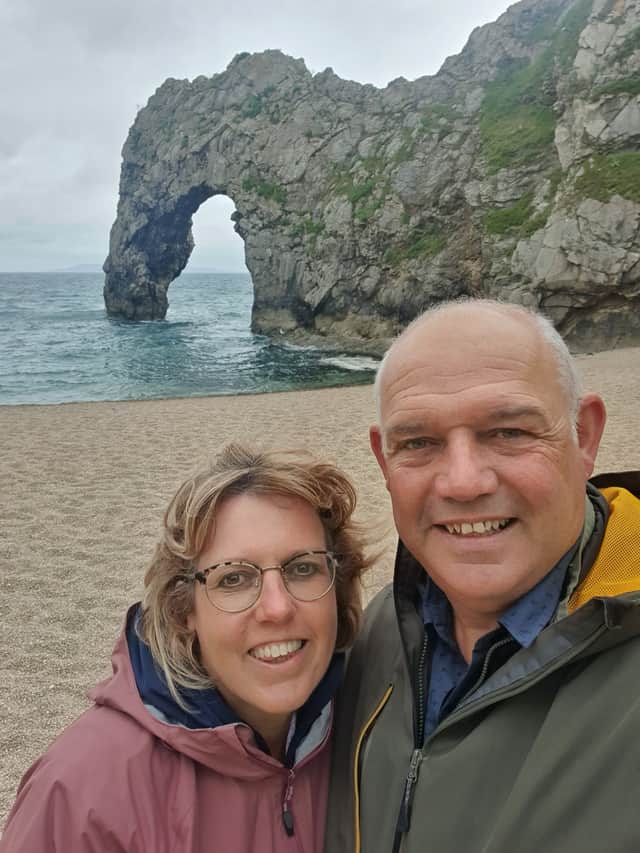
At an Inquest into Giselle’s death, Blackpool and Fylde Senior Coroner Alan Wilson recorded a conclusion of suicide.
He said her risks of self-harm had been ‘largely underappreciated’, and said he felt that ‘on balance, different decisions could have been made.’
He added that ‘different care earlier’ and ‘more intensive treatment and assessment’ could have resulted in a ‘more positive situation and outcome.’
‘Unacceptable lack of full and proper assessments’
Solicitor Amy Rossall, of Hudgell Solicitors, represents Mr Monro and said: “This is a truly tragic case and one which has highlighted the devastating consequences of when people in a mental health crisis don’t get the specialist treatment and support they need.
“What is completely unacceptable here is the lack of full and proper assessment and a failure to fully consider Giselle’s previous incidents alongside her escalating anxiety and thoughts of self-harm.
“There were clear red-flag warning signs, increasing over a two-month period.
“Allan did all he could to support his wife and help her, but he and she needed specialist help which wasn’t forthcoming. It left Giselle at risk and ultimately, that led to her taking her own life.”
Dr Gareth Thomas, Deputy Chief Executive Officer at Lancashire and South Cumbria NHS Foundation Trust (LSCFT), said: “We acknowledge the conclusion reached by HM Coroner relating to the sad death of Giselle Monro and I would like to offer our thoughts and condolences to her family.
“Delivering excellent patient care is of utmost importance to us and as such, following Giselle’s death, we carried out a thorough investigation which identified some issues with care delivery, which we have sought to improve.
“We take the findings very seriously and in our commitment to learning and improving, we have addressed the issues raised.
“Once again, our thoughts remain with Giselle’s loved ones at this difficult time.”
You’re not alone
Whatever you are going through, you don’t have to face it alone.
When life is difficult, Samaritans are there – day or night, 365 days a year. You can call them for free on 116 123, email them at [email protected], or visit www.samaritans.org for more