
Please don't touch our little black gadgets in the saltmarshes - this is what they're for
Visitors to a beauty spot on the Fylde coast have been asked to keep their hands to themselves.
Last week, the council’s Our Future Coast team put out mini buoys on the saltmarshes - tiny black devices that will be measuring tidal forces to help experts understand how the saltmarsh affects wave energy on the sea wall.
But with the chances of people innocently removing them as litter, or picking them up to inspect, a friendly warning has been issues.
A spokesman for Fylde Ranger Service said: “They will be in place for the next 12 months, If you come across them, please leave them where they are. We will be updating you on the results once they are in!”
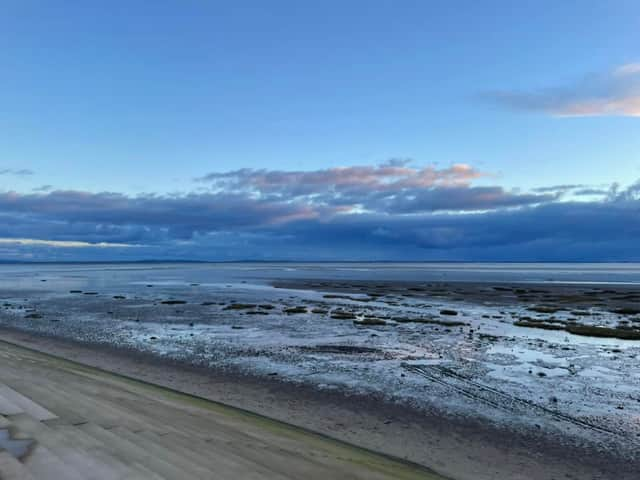

What is Our Future Coast - and what’s the problem at Granny’s Bay?
The Our Future Coast project is a DEFRA-funded innovation project, working in partnership with local councils, parish councils, the Environment Agency, organisations like Lancashire Wildlife Trust and Morecambe Bay Partnership, farmers, landowners, researchers and local people. Together they are working across multiple sites along the North West Coast of England to design and test new approaches to coastal flood risk management. In the face of coastal erosion, flooding and climate change, Our Future Coast will use nature-based solutions for sustainable coastal management.
In Fylde, the team is working to trial saltmarsh restoration techniques in the area around Granny’s Bay.
The saltmarsh has suffered reduction in extent in this area due to disturbance during the construction of the hard sea defences at Granny’s Bay. Our Future Coast are looking to restore and develop the saltmarsh in this area with the following key objectives:
- Develop saltmarsh restoration practices for an accreting coastline using sediment devices and saltmarsh vegetation planting
- Investigate the benefits of multi-buffers like saltmarsh and sand dune in terms of sea defence and water quality
Restoring the saltmarsh will not only act as an effective sea defence but also work with the existing hard infrastructure to increase its longevity. It will improve the visual amenity of the area, improve biodiversity, capture and store carbon and therefore help to mitigate against the impacts of climate change and consequent sea level rise.