
Update on controversial plans to demolish Cleveleys church for new convenience store
“We recommend that the developer works to save and re-model the church buildings.”
Yet more objections have been submitted to boost a campaign save a former church building on the Fylde coast from controversial demolition proposals.
Campaigners Ian French and Mark Butcher set up a petition to try and stop Cleveleys United Reformed Church from being bulldozed after a planning application was lodged with Wyre Council back in February. So far it has almost 1,350 names.
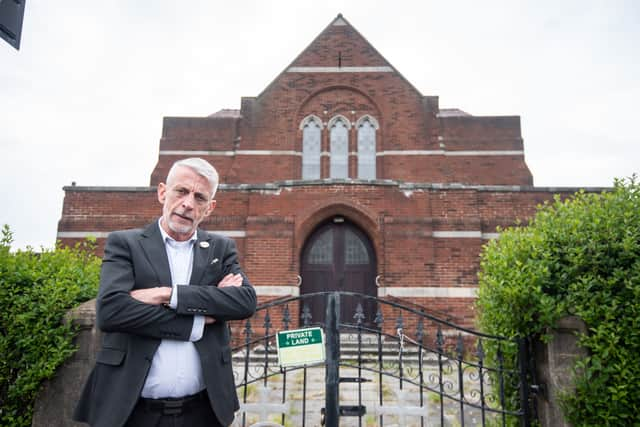

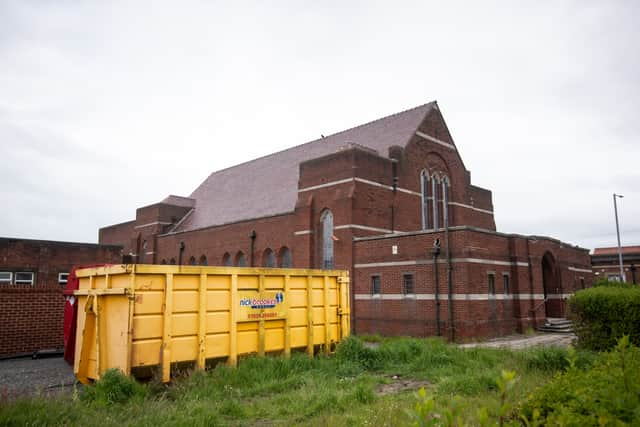
The proposals, yet to be decided on, are for the complete demolition of the church building on Rossall Road, which is no longer in use, and the construction of a new food and convenience store.
The latest objections are from a national campaign group called Don’t Waste Buildings and, critically, Wyre Council’s own conservation officer.
The applicant for the demolition plans is listed as Andrew Garnett, of developer Breck Holdings Limited, but no mention has been given at this stage of the retail company which would occupy the store. It is believed Breck Holdings owns the property.
This week, Don’t Waste Buildings (DWB) added its voice to the bid to save the 105 year old church building, which is listed as a non-designated heritage asset, supporting the comments made by the conservation officer.
It comes months after a number of other national heritage organisation, Save Britain's Heritage, the Twentieth Century Society, Historic Buildings & Places and the Council for British Archaeology, added weight behind the campaign to save it.
What objectors say
In the submission to the planning portal, Wyre’s conservation officer, Leah Newton, stated: “On the information presently available, it is not considered that the benefits of the proposal outweigh the total loss of the significance of this medium-significance non-designated heritage asset, particularly where an alternative approach capable of retaining its most significant elements does not appear to have been exhausted. “
This, it was argued, was contrary to parts of the National Planning Policy Framework .
DWB stated: “Don’t Waste Buildings (DWB) is a campaign to highlight the fact that unused buildings are untapped economic and social resources and that re-using them would dramatically lower waste, pollution and carbon emissions.
“Our report, ‘The Re-use Dividend’, sets out the evidence for why adapting and re-using existing buildings, instead of demolishing them and building new ones, brings multiple economic, social and environmental benefits.
“We agree with the (revised) submission from the local conservation officer, dated October 1 2026, which sets out the various ways in which this proposal is at odds with heritage policies in the new National Planning Policy Framework (NPPF) published in August 2026.
“The conservation officer’s text explains why demolishing a notable local historic building, of some architectural merit, that is in good condition, and replacing it with a building of no architectural merit or local distinctiveness, would be counter to several policies in the NPPF regarding the historic environment, and in the Wyre Local Plan.
“Instead, we recommend that the developer works to save and re-model the church buildings, so that they can be used as a supermarket, or for another purpose.”
The original church was designed by Edward Percy Briggs and opened in 1921, before being substantially enlarged in 1932 to the designs of Daniel Wynne-Thomas FRIBA, of the Bolton practice Wynne-Thomas & Button.
Wynne-Thomas' work included the prize-winning North Wales National Heroes' Memorial.
Campaigner Mr French has been encouraged by national response and said: “The Council for British Archaeography's Listed Building Casework and Advocacy Manager has recently confirmed that the organisation intends to submit further objections to Wyre Council.
“In correspondence with me, they state that they do not believe demolition is necessary to achieve the proposed development, question the sustainability case, raise concerns regarding the loss of embodied carbon in a structurally sound building, and suggest that alternative forms of adaptive reuse should be fully considered before demolition is accepted.”
What applicant says
A Heritage Statement on behalf of the applicant said: “The former church does not have any significant historic, architectural, artistic, or archaeological interest.
“Whilst the Council has suggested that the building may be regarded as a non-designated heritage asset, it should be considered as being of very limited heritage significance.
“This is reflected in the building’s relatively recent construction, lack of distinctive architectural qualities, absence of archaeological interest, and limited cultural and community value, as evidenced by its vacancy and deconsecration.”
The Planning Statement concludes: “Particular weight should be attached to the benefits of using vacant previously developed land in a highly sustainable location to serve the needs of the local community.”
A decision on the application is pending.
The petition can be found at: https://www.change.org/p/save-the-cleveleys-united-reformed-church-from-demolition?