
'Helped me keep a roof over my head' - Blackpool's new Selective Licensing scheme improves housing standards

Tenants including elderly people, vulnerable adults, and young families have been given housing, health and money advice through Blackpool Council’s Selective Licensing scheme.
Dozens of households have been helped to avoid becoming homeless in the first 18 months of a drive to improve housing outcomes in Blackpool.
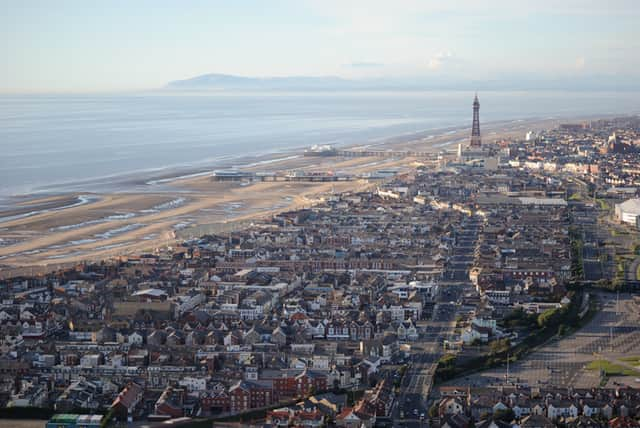
Blackpool Council’s Inner Area Selective Licensing scheme is intended to improve the standard of housing and neighbourhoods across eight wards.
Hundreds of households within these areas – Bloomfield, Brunswick, Claremont, Talbot, Tyldesley, Warbreck, Waterloo and Victoria – have been helped since the scheme was launched, receiving a range of support services.for issues including gambling addictions, rent arrears, financial abuse, anti social behaviour and mould.
Of these, more than one-in-10 have avoided becoming homeless as a direct result. Council teams have helped tenants to manage rent arrears or resolve disputes with landlords or neighbours that had risked eviction notices.

Some of those helped included:
Mouldy flat - A gentleman with Alzheimer’s living in a damp and mouldy flat was supported to agree a programme of repair works with his landlord. The landlord and the tenant struggled to communicate effectively because the tenant had recently been diagnosed with Alzheimer’s, affecting his communication and cognitive skills. While the gentleman was eligible to move into sheltered accommodation, he was keen to stay in his home. The housing support team negotiated a plan for essential repair works to be completed, to address excessive damp and mould. The gentleman now has a better relationship with his landlord, has confidence to ask for help from services, and hopes to stay in his home long-term.
Financially exploited - A woman who was being financially exploited was supported to regain her independence. A family member had nominated themselves as appointee on the benefit accounts and took the money for themselves. The woman’s Personal Independence Payments (PIP) and Universal Credit (UC) were then suspended as the appointee didn’t share updates on the need for regular reviews. When the housing support team visited, the woman appeared to just be isolated and lonely so was referred to a befriending scheme. But as the team built trust with the tenant, she disclosed that her benefits had been halted and she’d been subject to financial abuse. She was referred to Adult Social Care, supported to reclaim her PIP and UC payments, and regained the confidence to manage her money herself.
Gambling addiction - A man with mental health problems and a history of gambling addiction was supported to avoid being evicted for rent arrears. The tenant had fallen into rent arrears due to struggles with budgeting and gambling. He readily accepted help and said how he was keen to get into work too. The housing support team gave him simple budgeting tools to use and liaised with his landlord to look at managing the rent arrears, setting up a standing order to pay this off and cancelling or renegotiating his many subscriptions. The team gave him food vouchers to help bridge gaps in his finances in the first few months. He said: “They’ve helped me to get back on track and keep a roof over my head – it is very much appreciated.”
Anti-Social Behaviour - A dad being threatened with eviction was supported to avoid becoming homeless. The man had really poor relationships with his neighbours and landlord due to challenges with his son and the son’s friends. The man had been served with eviction notices for anti-social behaviour and unpaid rent, so readily accepted the offer of help from the housing support team. He has now been supported to move to a new, more secure flat. He said: “It gave me someone to talk to during a really difficult time. It helped me to feel less alone.”
The housing support team has helped 242 households to date, identifying needs off the back of home visits or property inspections, or tenants self-referring. This has included:
- 137 households struggling with the cost of living. The council offer everything from support to register for Universal Credit - for long-term stability - or food vouchers for supermarkets - to plug a short-term need.
- 103 people needing housing advice. The council’s team have managed housing options queries for people seeking bigger homes, resolved issues with landlords, including to manage rent arrears, and also informed tenants about the new Renters Rights Act.
- 67 households receiving money advice or debt support.
- 24 households needing health related support. The team supported with referrals into mental health services or physical health services, such as getting residents a gym membership or helping older tenants to get GP appointments.
- 19 households being referred for employment support, work programmes, or volunteering opportunities.
Of these cases, 233 are already resolved, including:
- A gentleman with Alzheimer’s living in a damp and mouldy flat who was supported to agree a programme of essential repair works with his landlord.
- A man with mental health problems was supported to avoid being evicted for rent arrears.
- A woman who was being financially exploited was supported to regain her independence.
- A dad threatened with eviction was supported to avoid becoming homeless.
Cllr Dave Flanagan, cabinet member for housing, said: “This Selective Licensing scheme is just one of many ways we’re seeking to improving housing and people’s lives in Blackpool. Good housing is intrinsically linked to better health, employment and educational outcomes, giving people foundations they can flourish from.
“As these figures show, the scheme has allowed us to offer support to hundreds of people in need, many of whom didn’t know they were eligible, or didn’t feel able to ask, for help from services.
“The team have made a huge difference to the lives on tenants living across the Inner Area. They’ve made urgent referrals to colleagues in Adult Social Care, stopped people from becoming homeless, or just offered a friendly face and reassured someone that they’re not alone.
“The stories of people we’ve helped show the clear benefits to tenants, and that of course has a knock-on positive effect for landlords, too – they then have happier tenants and more stable tenancies. We’re doing all that we can to support good landlords and tackle bad landlords, and the work of our housing support team.”
What is selective licensing?
Selective licensing aims to improve standards in an area by addressing the poor management of some private landlords and the poor property conditions they offer.
Any house, flat or room rented out within the private rented sector within the designated area requires a license, subject to some exemptions.
Landlords must adhere to a number of licence conditions around property management, tenancy management, fire safety and anti-social behaviour, all designed to provide a good standard of living conditions.
The standard licence fee for a single dwelling is £772 for the five-year period of the scheme. Fees go back into running the scheme, including funding property inspections, to improve housing standards, and housing support workers, to offer a range of social, health-related and financial guidance to tenants. No profit is generated for the council as a result of the scheme.
The Inner Area Selective Licensing Scheme is Blackpool’s fourth licensing scheme for rental properties. Additional Licensing schemes in South Shore, Claremont and Central helped to reduce crime rates by more than half. In South Shore, criminal incidents dropped from 720 to 333 year-on-year (2012-13).
Landlords with properties within the eight designated wards should apply for a licence via: www.blackpool.gov.uk/selectivelicensing and tenants who want to learn more about their rights as a private tenant can visit: Information for tenants living in private rented homes