
Stroke patient Valerie Kneale was so ill when attacked at Blackpool Vic surgery was her only lifeline
A woman who died after she was violently sexually assualted while being cared for on the stroke unit at Blackpool Victoria hospital was unbeknown to be gravely ill when she was attacked, an inquest heard.
Coroner Alan Wilson sitting at Blackpool Town Hall heard evidence for a second day into the untimely death of Valerie Kneale from Poulton.
The hearing was told medics summised the deterioriating condition of the 75-year-old was because she was suffering from a slow brain haemorrage.
Mrs Kneale, a retired clerical assistant, had been taken into A+E at Blackpool Victoria Hospital after her family grew concerned she had suffered a stroke at her home.
The stroke caused her to fall and fracture her leg.
The inquest was told Mrs Kneale was initially thought to be ‘doing OK’ and appeared chatty.
But just four days later she passed away surrounded by her family.


A post mortem revealed the cause of Mrs Kneale’s death had not been a stroke but forceable’ vaginal and internal injuries caused by a sexual assault.
Consultant Dr Ahmed, clinical head of stroke medicine at the hospital told the hearing Mrs Kneale had shown early signs of a cerebral haemorrhage with ‘her gaze to the right’ and a ‘facial droop.’
Her initial Glasgow Coma Scale (GCS) score was recorded as 14 at 6am but later deteriorated sharply.
Dr Ahmed said: “She became drowsy. It’s possible she had a slow haemorrhage. When the pressure builds, it can suddenly take over and cause a rapid decline.”
The court heard her GCS score later dropped to 3. A CT scan taken before 9am showed significant bleeding and swelling with a midline shift - a dangerous displacement of brain tissue caused by pressure inside the skull.
Dr Ahmed said: “Without surgery there was no way of her surviving.”
However, neurosurgeons advised that while an operation might prolong her life, it would not offer her a good quality of life.
Asked why there was a gap in overnight observations and why he didn’t address that first thing, Dr Ahmed said: “I had to act when her breathing was so heavy - I was not really thinking about that.”
Stroke unit palliative nurse at that time, Nikki Roberts, who had worked at the hospital for more than eight years, described how patient handovers took place each morning, with staff flagging concerns in what she called a ‘safety huddle.’
She said nothing had been raised about Mrs Kneale’s condition that morning.
Ms Roberts told the Cornoner: “She wasn’t alert enough for a swallow assessment and she started to snore. If I had seen anything alarming, I would have reported it to the medical team.”
Ms Roberts said she was caring for 14 patients that day, including some at the end of life.
She acknowledged that missing paperwork was ‘not surprising’ given the reliance on paper notes at the time.
She said: “There were papers falling out everywhere from all members of staff.”
Mrs Kneale was admitted to the hospital on November 12, 2018. She died four days later on November 16.
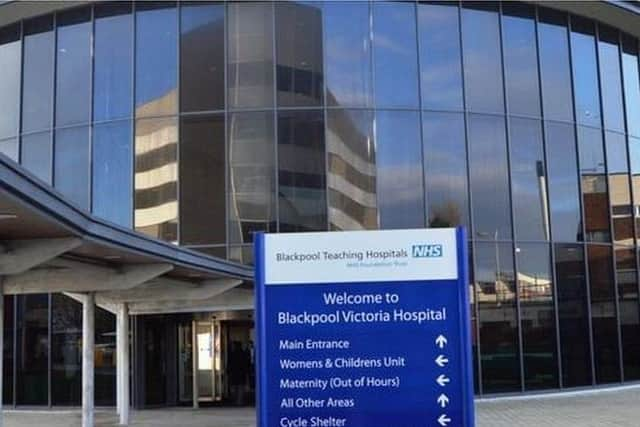
A post-mortem examination found Mrs Kneale did not die as a result of her stroke, but due to a ‘forceable sexual assault’ inflicted at least 48 hours before her death, while she was in hospital.
The findings, presented by forensic pathologist Dr Alison Armour, prompted a murder investigation, although police later said all leads had been exhausted without identifying a perpetrator.
At the inquest, Matthew Pover a nurse in charge of the overnight shift on November 12–13, described his “utter disbelief” at the report.
Mr Pover said: “I cannot believe Valerie suffered this injury on my ward. From what I saw the family were with her constantly, so I can’t see when this injury could have been caused.”

Mr Pover told the coroner, Alan Wilson, that Mrs Kneale had been alert and lucid after her assessment in A&E and that he had limited interactions with her once she was moved onto Ward 32, where female stroke patients are treated. He said he relied on other staff to flag any concerning observations.
The inquest heard that when healthcare assistants prepared Mrs Kneale’s body for the mortuary, they discovered extensive bleeding, including around the vaginal area.
Mr Pover said he did not realise the seriousness at the time and assumed that some fluid leakage from a deceased patient was ‘not unusual.’
Detective Chief Inspector Jill Riley, a retired senior investigating officer said the failure to flag concerns immediately led to a “significant delay” in preserving crucial evidence.
By the time the post-mortem was conducted in December, Mrs Kneale’s room had been cleaned, her clothing disposed of and hospital CCTV data from the stroke ward had been overwritten.
Access to the stroke ward was meant to be secure, but police found that doors were sometimes propped open or staff tailgated in.
Mr Pover said such breaches were ‘a lot less likely’ during overnight shifts due to lower foot traffic.
The hearing continues.