
‘We’re purring and roaring’: Lancashire business chiefs’ delight after mayor announcement
They believe the county is finally about to get what it deserves.
Lancashire business leaders are “purring” at the prospect of the county finally getting an elected mayor - and ready “to roar” in response to the growth opportunities that are now within their grasp.
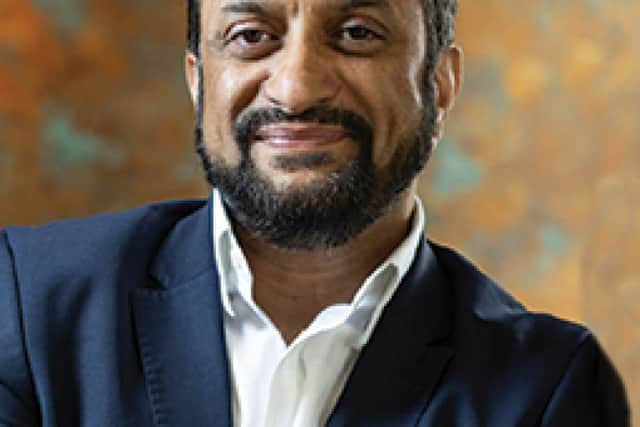
The metaphors of feline contentment and empowerment came in a message delivered by the chair of the influential Lancashire Business Board.
Mo Isap was speaking at the first meeting of the Lancashire Combined County Authority (LCCA) devolution body since the government announced in the budget last month that it was in “the final stages” of agreeing a mayoral deal for the area.

All the latest news and top stories from across Blackpool and the Fylde coast directly to your phone.
Never miss a thing.Click here to join
The county is set to hold elections for a mayor in May 2028, subject to the successful conclusion of negotiations with ministers and the approval of the three local authorities that make up the LCCA - Lancashire County Council, Blackpool Council and Blackburn with Darwen Council. Some form of public consultation is also expected.
It would bring to an end more than a decade of internal deliberations over the county’s willingness to introduce the powerful figurehead - a subject on which Lancashire’s 15 council leaders have rarely found themselves on the same page.
Momentum had appeared to be building 12 months ago as the LCCA responded to a government request for Lancashire to bring forward plans for a “deeper” devolution arrangement than the one it had agreed back in 2023 - a nudge widely interpreted as code for accepting a mayor.
However, progress ground to a halt for much of this year after ministers cancelled two meetings at which it was hoped they would answer a call from county council leader Stephen Atkinson - long sceptical of the mayoral model - to set out the exact financial terms on offer for any Lancashire deal.
The seeming stasis - which persisted until a late September meeting with devolution minister Jim McMahon - saw business restlessness brew.
The last time the LCCA met earlier that month, Mo Isap laid bare the private sector’s frustrations at what he said were appalling levels of lost business investment and government funding - and the county’s status as the only part of the North not to have, or be in the process of getting, a mayor.
However, the tone was transformed at Tuesday’s gathering, with Mr. Isap heralding the fact that, already, “funding streams are opening up for us”.
He added: “We are sufficiently purring at the news [from] the budget - and how we can now be recipients of the investment that we deserve.”
Mr. Isap - founder and CEO of tech training provider IN4.0 Group Limited - also highlighted the chance now to fully realise the potential of the Samlesbury Enterprise Zone, where the new National Cyber Force headquarters were opened by the King on Monday.
“The real opportunity there is that now we have a catalyst and a gateway to make some significant economic impact through our growth corridor and...growth strategy - and I think the businesses have stepped up superbly and are totally committed now to really roar.
“So we are purring and roaring - and collectively putting that royal seal to the work that we're doing already,” he said.
He praised the commitment of fellow business leaders and the political leadership he said had been provided by County Cllr Atkinson and Blackpool and Blackburn with Darwen council leaders Lynn Williams and Phil Riley in “getting the best deal for Lancashire” .
However, County Cllr Atkinson noted that there had still been no written confirmation of the funding package that would come with a mayoral agreement - and said a county MP, whom he did not name, was pursuing that issue with Jim McMahon.
As the Lancashire Post has previously revealed, Mr. McMahon has indicated in talks with the LCCA leaders that Lancashire should expect funding commensurate with similar areas that have done a mayoral deal - in the region of £30-£35m a year for the next 30 years.
The meeting heard that there had, however, been confirmation of £7.27m in capital funding for the LCCA in the 2027/28 financial year, as part of the government’s Good Growth Fund - including the option of using the cash to overcome barriers which are holding back development, such as viability gaps and land and remediation costs.
The authority will also gain access to a new £1.5bn borrowing facility for mayoral strategic authorities from 2028 and, ahead of that, to the Priority Projects Programme, delivered by the government’s new No.10 North base in Manchester.
The county has been asked to start identifying projects that could benefit from corralling different government departments to resolve potential roadblocks to the delivery of individual schemes.
‘Give mayors planning powers’
The LCCA meeting was held just hours before the publication of a new report urging the Prime Minister to give a future mayor of Lancashire - and their counterparts across the country - a bigger role in shaping and authorising infrastructure projects.
The suggestion - made by non-partisan thinktank The Future Governance Forum (FGF) and the Institution of Civil Engineers - calls for mayoral leaders to be handed more power to permit and influence a raft of schemes, including regeneration initiatives like the Eden Project Morecambe.
According to “A Mandate to Build: a new approach to public engagement in infrastructure planning”, mayors should be able to consent to proposals, following "clearer” public consultations. These should be based on independent assessments of the key issues facing infrastructure projects - introduced at an early stage - and defining the fixed elements of a scheme and what is open for discussion.
The report says communities must feel “the benefit” of local infrastructure - and not just be compensated for any harms caused in the process of delivering it.
Adam Terry, FGF executive director, said: “Too often in this country, infrastructure projects are framed as a battle between those who want more of the essential infrastructure we all need, and those who stand in the way. But in reality, most people don’t want to stop infrastructure projects, they want to shape them.
“The Prime Minister’s plan to devolve more decision-making power around the country is absolutely the right instinct. If Andy Burnham is serious about ending the ‘Whitehall knows best’ mentality, devolution must extend to decisions over infrastructure too. And this means giving mayors a stronger role in shaping how and where major projects are delivered in their regions.
“By engaging communities and mayors in the right place, at the right time, the Prime Minister could deliver growth across the country and ensure communities feel listened to on the decisions that matter to them.”
Meanwhile, Sam Gould, executive director of learning and insights at the Institution of Civil Engineers, said, “Public trust in government and the institutions that plan, fund and deliver infrastructure is alarmingly low. To rebuild it, we need to get public engagement right.
“Recent planning reforms will help speed up infrastructure delivery, but they won't be enough to improve public trust or community outcomes in isolation. With renewed political focus on devolution, there's a unique opportunity to rethink how infrastructure decisions are made and how projects are shaped.
“Moving away from tick-box exercises and engaging communities in meaningful dialogue about a project's benefits, trade-offs, and long-term value will lead to better decisions, stronger local support, and more successful delivery.
“Ultimately, trust is built when people see infrastructure improving their lives. That is far more likely to happen when communities have a genuine voice in shaping projects.”