
Companies could soon have to pay for causing traffic jams on Lancashire roads

A new scheme to cut traffic jams on Lancashire’s roads has moved as step closer.
Lancashire County Council – the highways authority responsible for 12 boroughs, including Preston, Chorley, South Ribble, Lancaster, Fylde and Wyre– has launched a feasibility study into charging utility companies for digging up carriageways.
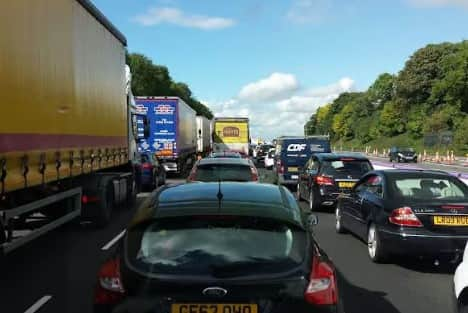
The authority is looking at whether introducing a Lane Rental Scheme could reduce roadworks on its highways at peak times and cut congestion.
How would it work?
Under the scheme, companies would pay a daily charge for each day they occupy a section of road during peak hours.
No charge would apply if works are carried out during off-peak times.
The aim is to encourage smarter planning, more collaborative working, and a shift toward scheduling works when roads are quieter.
Crucially, any income generated must be reinvested into improving the highway network – a requirement set by government regulations.

So what’s next?
A feasibility study is currently under serious consideration to assess whether a scheme would be suitable for Lancashire.
This includes identifying the most congested parts of the network and reviewing roads formally classed as traffic sensitive – those where roadworks are likely to cause significant disruption – as required by government regulations.
A decision on whether to proceed will be made early next year, with a potential application to the Department for Transport to follow.
Utility companies – which would be most affected – and other stakeholders would be consulted if the scheme progresses.
What has been said about the scheme?
Cllr Warren Goldsworthy, Lancashire County Council’s highways and transport boss, said: “We know how frustrating roadworks and congestion can be.
“That’s why we’re exploring whether a Lane Rental Scheme could help reduce disruption across our road network.
“Lane Rental Schemes don’t stop roadworks – but they do encourage smarter planning, off-peak scheduling, and better coordination to keep traffic moving.
“No decisions have been made – we’re simply exploring whether this approach could work for Lancashire before making a considered choice that’s driven by the data.”
Has such a scheme been implemented elsewhere?
A similar scheme has been proposed by Transport for Greater Manchester, with daily charges ranging from £1,500 per lane closure to £2,500 per full road closure, and a £350 charge for work on areas that affect pedestrians.
The scheme is aimed at better incentivising organisations to collaborate and coordinate roadworks, as well as to work outside the peak times.
TFGM says it will encourage companies to cut the length of time that works are in place, carry out more work overnight or on weekends, and provide discounts for those that embrace less disruptive approaches.
It is a government-backed initiative designed to reduce disruption caused by roadworks on the busiest parts of the highway network during peak times.