
‘Everyone knows Blackpool - but not the Fylde coast’: row over new council's name
The individual places that make up the new authority's patch will not be referred to in its name.
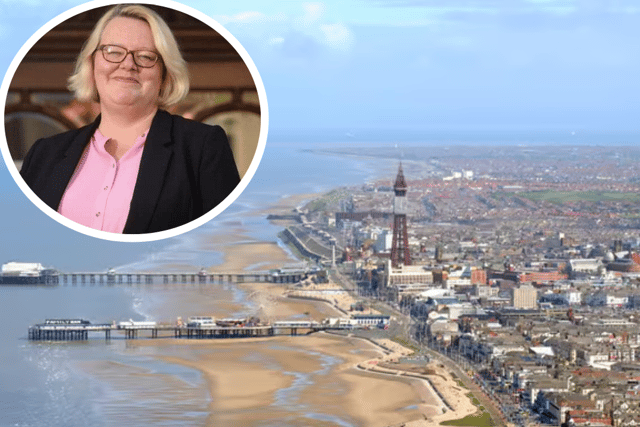
The leader of Blackpool Council says most people will not “have a clue” where the new Fylde Coast Council covers without Blackpool being in its name.
Cllr Lynn Williams was speaking after the title of the new authority was effectively confirmed - with Fylde and Wyre councils objecting to a Blackpool-led namechecking of individual areas.
The organisation will take over from the existing Blackpool, Fylde and Wyre authorties - and Lancashire County Council - in April 2028. The change is part of a government-ordered shake-up that will see all 15 main councils in Lancashire scrapped and replaced with just four new ones.
The hitherto provisional ‘Fylde Coast’ moniker was formally put forward as part as a submission to the government last week from Lancashire’s current councils that dealt with a raft of issues relating to the overhaul.
The Ministry of Housing, Communities and Local Government (MHCLG) had previously said it would consider alternative naming suggestions only if there was “unanimous” agreement amongst the authorities presently in operation in each area.
Cllr Williams said she had wanted the new body to be called ‘Blackpool, Fylde and Wyre Council’, but had been unable to get the necessary thumbs up from the other authorities in the arrangement.

Enjoy unlimited access to local news, the latest football stories and new puzzles every day With a digital subscription, you can see fewer ads, enjoy faster load times, and get access to exclusive newsletters and content
The Labour politician told The Gazette she believed it was a “missed opportunity” not to include the name of the resort given that it is one of the “best-known places in the country”.
“I wanted it to have a name that people could understand immediately,” Cllr Williams said.
“Blackpool is the economic and cultural centre of this part of Lancashire - [and] it’s also internationally recognised. But if you ask someone outside of Lancashire - and even some people within it - ‘Where’s the Fylde coast?’ they wouldn't have a clue.
“[So] people aren't going to know where Fylde Coast Council is - they're just not. It’s a bit of a shame really.”
She stressed that her suggestion was not about “diminishing Fylde and Wyre”.
“Quite the opposite, because putting all three places in the name makes it immediately clear which communities and geography the new authority represents.
“We should give it a name that tells people exactly where it is,” Cllr Williams said.
She added that she was hopeful “progress” could be made on the issue once the new authority was operating in fully-fledged form in 2028 and had the opportunity to re-name itself if its members can come to an agreed position.
In response, Karen Buckley, the Conservative leader of Fylde Council, said the 'Fylde Coast Council’ name “aptly fits the geography of the area and is widely used already by residents, businesses, tourism bodies, health services and media”.
“It is recognisable and authentic - and we're happy to stick with it," Cllr Buckley added.
Meanwhile, Wyre Council's Conservative leader Michael Vincent said he did not believe that ‘Blackpool Fylde and Wyre’ was “a better name than Fylde Coast Council”.
“If people don’t know where the Fylde coast is, then it’s up to the new council to put it on the map,” Cllr Vincent said.
He also told The Gazette that if the Blackpool name had been used as a way of drawing in funding, there was a risk that the cash would be "ringfenced" for the resort and so not benefit the broader patch of the new authority.
Cllr Williams said, despite her disappointment, Blackpool Council would now “absolutely get on with” preparing for the new body, “because we're going to do the best for the people of the whole area”.
Meanwhile, the letter to the MHCLG revealed that Lancashire County Council had pushed for each of the four new authorities’ titles to make reference to ‘Lancashire’ - but it, too, had been unable to secure unanimity for that position amongst the existing local councils on the Fylde coast.
The government will confirm in the coming weeks which names will be included in the legislation that will formally establish the replacement authorities.
Once Fylde Coast Council formally takes charge on 1st April, 2028, it could - like any local authority - institute a process to change its own name, but it would require a majority of its new members to agree.
Those councillors will be elected to the new entity almost a year earlier - in May 2027 - when elections to a so-called ‘shadow’ version of the council will take place. That organisation will then operate alongside Blackpool, Fylde, Wyre and Lancashire County councils for the final 11 months of their existence.
The new set-up will end the two-tier split between the county council and district councils like Fylde and Wyre which sees County Hall take responsibility for services including highways, social care and schools, while the districts look after the likes of bin collections, parks and most planning applications.
The new Fylde Coast Council will be responsible for delivering all services its patch - just as Blackpool Council has been in its area since converting from a district into a unitary authority in 1998 and taking over county council responsibilities.
How did we get here?
Ministers announced last month how the county would be carved up when its 15 existing local authorities are abolished.
Those current councils had put forward five different suggestions for the size and shape of their replacements under the revamp – along with what were largely generic geographical names to identify what will be merged municipal areas.
The provisional names approved by the government were made up of those initial propositions and others subsequently suggested by councils in the relevant areas.
Fylde and Wyre councils had proposed a council configuration that would have seen them merge with each other and Blackpool and Lancaster – but that was rejected by the government.
Meanwhile, Blackpool had suggested an alternative four-way split to the one that was ultimately chosen, which would have resulted in the town hooking up with Preston, Fylde and western parts of Wyre. However, that was also unsuccessful.
‘We do love you, Blackpool – from Preston’
The leader of Preston City Council offered “commiserations” to Blackpool after the latter’s proposal to merge with Preston – along with Fylde and the west of Wyre – failed to find favour with ministers.
Matthew Brown said: “We all love Blackpool, of course. But, culturally, it's quite different - because obviously we've got lots of rural areas and they are mainly a coastal community. We've got a large student population and we're quite a diverse community as well.”
The merger pattern backed by Preston – which will see it marry up with Lancaster and Ribble Valley – was the one ultimately chosen by the government.