
Grandad, 70, died at Blackpool Victoria Hospital after being readmitted a month on from heart operation
Former firefighter taken ill with sepsis following discharge after heart procedure
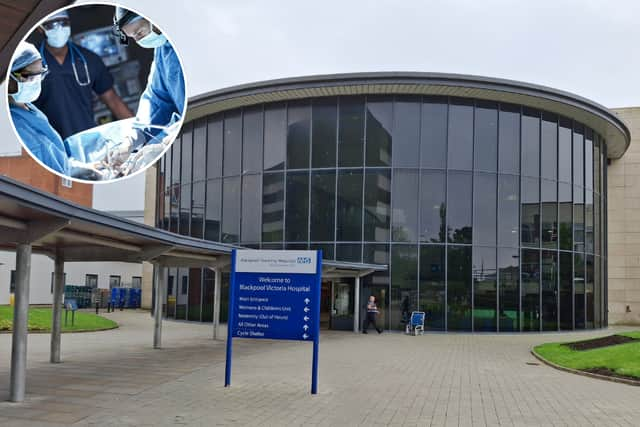
A 70-year-old father of five and grandad of 23 died in Blackpool Victoria Hospital after being readmitted just over a month after undergoing a heart operation.
Robert Barwick, a former firefighter from Morecambe, was in hospital - which houses the regional cardiac centre - for just under four weeks after the elective aortic valve replacement procedure was carried out on February 18 last year.
There was a small tear in the aortic arch during the operation, resolved at the time, and Mr Barwick suffered some post-operative complications, including a paralysed bowel for a time.
He was also diagnosed with dementia during that stay in hospital but on March 13, he was given the all-clear to be discharged and given a date for a follow-up outpatient appointment of March 26.

All the latest news direct to your inbox
On reporting for that, he was found to be suffering from sepsis, with his family saying he had been ill at home for some days but had resisted seeking medical attention ahead of the scheduled appointment.
He was admitted for investigation and treatment and given anti-biotics that evening, but after several days, his condition deteriorated and he died at the hospital on March 31.
A post mortem carried out by pathologist Dr Darek Golka found his cause of death to be multi-organ failure caused by peritonitis, caused by an ischemic bowel and a perforation of the gall bladder due to septicaemia of unknown origin.
Blackpool and Fylde chief coroner Alan Wilson added in his conclusion at an inquest held at Blackpool Town Hall that contributing factors in Mr Barwick’s death were frailty resulting from the earlier heart value operation and the previous long stay in hospital.
Mr Mohamed ElSeagh, the aortic and cardiac consultant who carried out the valve procedure, said Mr Barwick had been fit to be discharged when he was and independent witness Mr Neil Borley, a colorectal surgery specialist who reviewed the circumstances, said he found no issues with the discharge.
The likely scenario, said Mr Borley, was that Mr Barwick returned to the hospital suffering from sepsis and the ischemia in the bowel developed from there and led to the perforation of the gall bladder.
He added that once the ischemia set in, it was likely to prove fatal.
Mr Wilson returned a conclusion of natural causes.