
Blackpool Marathon survivor’s story highlights need for new life-saving advice for grassroots sport by Resuscitation Council UK
Blackpool Marathon survivor’s story highlights need for new life-saving advice for grassroots sport by Resuscitation Council UK
Resuscitation Council UK (RCUK) has today published a new practical guide to ensure everyone involved in grassroots sport can recognise cardiac arrest and act fast to help save a life.

Cardiac arrest is the most time-critical medical emergency a person can face. For every minute without CPR or defibrillation, the chance of survival falls by 10%. Starting CPR quickly and using a defibrillator can more than double a person’s chance of survival and help support a full recovery.

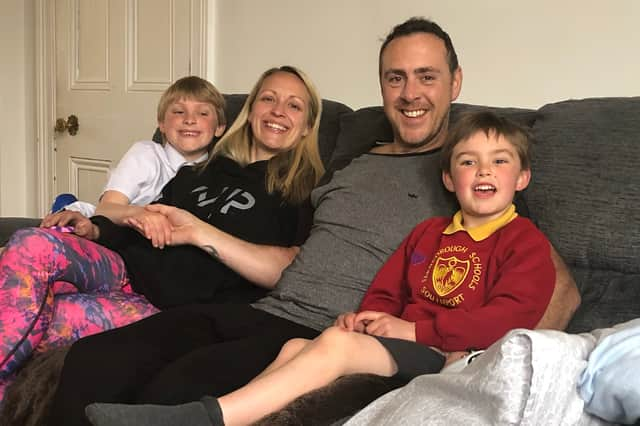
The importance of fast action was highlighted in April 2022, when Richard Moore was taking on the Blackpool Marathon for the second time, determined to beat his previous best and finish in under four hours. For most of the race, everything was going exactly to plan.
Three hours in, Richard felt a tightening feeling in his chest, what he assumed was a stitch. Like many runners, he pushed through. What Richard didn’t realise was that he was in the middle of a heart attack. After almost an hour of fighting on, and just 400 metres from the finish line, he experienced a cardiac arrest and collapsed.
A runner just two places behind immediately stopped to help, with an NHS worker beginning chest compressions without hesitation. Paramedics stationed at the finish line reached Richard quickly, taking over CPR efforts and delivering a lifesaving shock with a defibrillator.
Richard has no memory of those moments; everything he knows is from the accounts of others. He was transported to Blackpool’s cardiac unit, where he received a stent.
“I’m incredibly lucky to still be here. I had no idea what was happening at the time – everyone who helped me that day quite literally saved my life.” Richard Moore, cardiac arrest survivor
Yet, despite the live-saving actions taken in Richard’s case new research commissioned by RCUK reveals a worrying gap in preparedness at grassroots level. Nearly one in three people (33%) say they would not know how to perform CPR if someone had a cardiac arrest at a community sporting event, and almost half (46%) do not know where the nearest defibrillator is located at their local sports venue.
In response to these findings, RCUK launching the Resuscitation in community sports: a national best practice guide this week which aims to equip anyone who takes part in grassroots and organised sports – coaches, players, volunteers and spectators - with the skills and confidence to help save a life. That includes local football teams, swimming clubs, park runs and any other community-based sporting activities.
The guide provides straightforward, step-by-step advice on recognising the signs of cardiac arrest - which can include unresponsiveness, abnormal breathing, seizure-like movements, or gasping - and on taking immediate action.* It makes clear that if someone collapses during sport and remains unresponsive, it should be treated as a cardiac arrest unless proven otherwise. Waiting for certainty could cost lives.
This new publication helps embed life-saving preparedness into everyday community settings, where formal medical cover is rarely available and where swift action by those present can make all the difference.
The guide covers how to call 999 effectively, how to begin high-quality CPR, and how to locate and operate a defibrillator (AED) - devices designed to be used by members of the public, not just medical professionals. It also sets out practical steps clubs and organisers can take before events to ensure emergency plans are in place.
RCUK is urging everyone involved in grassroots sport, whether they play, coach, volunteer, or simply turn up to cheer, to read the guide and take steps to ensure their club or organisation is prepared.
Knowing what to do and having a plan in place does not require medical training. A willingness to learn and a small amount of preparation can help save lives.
James Cant, Chief Executive of Resuscitation Council UK, said: “Cardiac arrest can happen to anyone at any time. In grassroots sport, where medical experts aren’t always present, preparation can help save lives. This guidance gives clubs, organisers, players and spectators practical, achievable steps to put emergency plans in place. You don’t need to be a healthcare professional to make a difference - you just need to be ready.”
Dr Zafar Iqbal, Head of Sports Medicine and Performance at Arsenal Football Club, said: “I welcome these new guidelines. Sudden cardiac arrest on the field of play is a rare but devastating event, and early CPR and defibrillation can more than double the chances of survival. These standards are designed for local community teams. The aim is to improve the response to cardiac arrest in grassroots sports and increase the chances of a full recovery. Simple and accessible, they should be used by coaches across all community sports – such as football, swimming and tennis.”
* The guide is designed to support formal CPR training and is not a clinical training manual.