
The No Limit Records Way: the aesthetic and practices of the hip-hop label still influencing musicians in 2025

From art design to “gettin’ paid” - the overarching influence of Master P and No Limit Records continues to resonate in 2025
- They were the underdog story of the ‘90s music scene, from a lowly Southern USA independent label to titans of the scene.
- The influence of Master P and No Limit Records lives on today, be it their style or attention to “brand building.”
- Benjamin Jackson takes a look at how the label not just propelled a certain aesthetic, but also changed the rules of the music business.
Have you also been seeing numerous band merchandise that has this similar style: over-the-top, computer-generated graphics featuring diamond-studded fonts and flashy cars?
Be it musicians from the hip-hop scene or other genres borrowing the Pen and Pixel vibe as a nod to an era of music, that style has been emulated numerous times in recent years. And while they may not have “invented” it, ask any '90s hip-hop fan and they'll tell you that No Limit Records were certainly among the biggest proponents of the aesthetic.
Founded by Percy "Master P" Miller in the early 1990s, No Limit Records quickly grew from a small record store into a hip-hop juggernaut. Fuelled by a relentless output of albums from a core roster of artists—including Snoop Dogg, Mystikal, Silkk the Shocker, and Master P himself—the label hit its peak in the late 90s, becoming one of the most prolific and powerful independent labels in the industry.
While its chart dominance was undeniable, No Limit's true legacy was in its contribution to not just the hip-hop scene, but independent music as a whole. While it’s obvious the artwork and style over the years have been "cribbed," it would also be the label's business practices that would have an overwhelming influence in the industry.
So alongside the ghetto fabulous artwork and the distinctive anthems No Limit artists provided, they also happened to set the trend for how modern musicians can, and perhaps should, be paid for their creative endeavours.
The No Limit Aesthetic
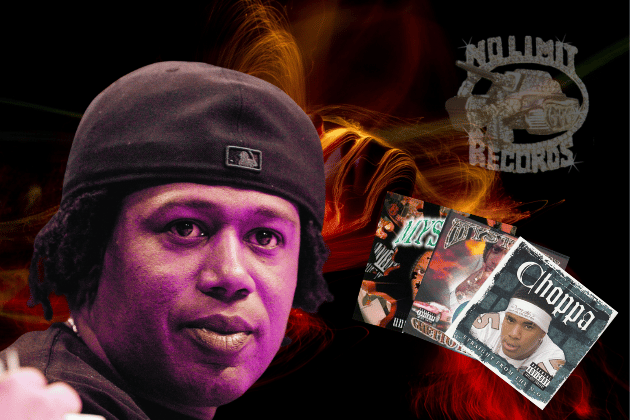

The first thing you noticed about a No Limit release was the album cover. Before you even heard a song, you were immersed in a visual world of unapologetic opulence – “bling bling” to quote another influential label, Cash Money Records.
The label's in-house art team, Pen & Pixel Graphics, pioneered an instantly recognisable aesthetic defined by over-the-top, computer-generated imagery. Albums featured artists draped in oversized diamonds and gold chains, posing in front of military tanks, expensive cars, and stacks of cash.
This aesthetic was a literal manifestation of the label's ethos: wealth, independence, and an in-your-face approach to success.
The iconic tank logo would also become a symbol of the label's power, and it was so distinctive that it has since been widely copied and ironically celebrated by a new generation of artists on social media.
Cardi B is a fine example of the aesthetics' influence: known for her over-the-top visual style, her style has often been compared and cited as embodying the Pen & Pixel aesthetic.
Her collaboration with Megan Thee Stallion, ‘WAP,’ has been a masterclass in the kind of maximalist, surreal, and unapologetically gaudy imagery that Pen & Pixel perfected. Her style is a modern interpretation of that same "more is more" philosophy.
The No Limit Business Model
Snoop Dogg once gave an interview in 2018, speaking about his time with No Limit Records, having released his 1998 album, Da Game Is to Be Sold, Not to Be Told, through the label.
During that interview, the hip-hop superstar revealed that it was Master P who “showed me the business. I know the creative side, but he showed me the business. If it wasn't for No Limit, it wouldn't be no money in rap! It was NO MONEY in rap until Master P came out!"
Royalty rates, a cause célèbre still discussed among musicians to this day thanks to streaming services, were generally at a rate of just 10% to 15% of the wholesale price of an album.
That was before numerous other deductions that all added up; packaging costs, marketing expenses, and breakages (those records that either were destroyed in transit or given away as deducted as a breakage).
The biggest issue for artists was how the money was recouped; a label would give an artist an advance to fund the recording and marketing of an album, but the artist had to pay all that money back before they would see a single royalty cheque.
It meant many artists with gold or platinum albums never actually earned a significant income from record sales because they were still "in the red" with the label.
Generally speaking, the label would also own the master recordings, so once an artist signed, the label controlled all future uses of the music, and the artist would never fully own their work. Taylor Swift’s drama with her previous recordings is a great example of this.
In contrast, Master P's deal with Priority Records was completely revolutionary. He negotiated an 80/20 distribution deal, with the astonishing 80% split going to No Limit Records.
But the key wasn't just the percentage; it was the structure. Master P retained full ownership of all his masters. Priority Records simply handled the manufacturing and distribution of the albums.
No Limit was responsible for all of its own marketing, promotion, and recording costs, but because Master P was an expert at this, he was able to maintain full control of his creative vision and keep a massive chunk of the profits.
The label created a business model where an artist could achieve massive commercial success and still retain true ownership and financial independence.
The No Limit Universe
Master P's vision extended far beyond the confines of the music studio; he wanted to build a universe.
The label’s famous "Soldiers" not only appeared on each other's albums but also on film sets and even in the wrestling ring. The label’s most notable mainstream crossover was its collaboration with World Championship Wrestling (WCW).
In 1999, Master P formed a stable called "The No Limit Soldiers" with his brother, Silkk the Shocker, and a team of pro wrestlers. The group's storyline was a major feature of WCW programming, bringing the No Limit brand and sound to a new, broader audience – if the angle itself was considered somewhat of a flop.
The label also produced and released its own films, including the popular urban drama ‘I Got the Hook-Up,’ starring Master P and AJ Johnson. These collaborations showcased the label's ambition and demonstrated how a hip-hop brand could expand into a powerful, multi-platform media empire, cementing No Limit’s legacy as a force in entertainment.
This approach to brand-building is a model that has found its ultimate modern-day parallel in Travis Scott's Cactus Jack empire. Just like Master P, Travis Scott isn't just focused on music; he has built a fully integrated, multi-platform brand.
His highly successful collaborations with McDonald's and Fortnite were not just standard endorsements; they were immersive, creative experiences that brought his universe to a mass audience.
This expansion into everything from signature sneakers with Nike to his own hard seltzer brand is a direct echo of Master P's original vision, demonstrating that the most successful artists today don't just sell albums—they build self-contained business empires.
So, what Happened to No Limit Records?
All good things come to an end – in this case, it was perhaps a case of deluging a market in an age where file sharing and downloading were becoming more commonplace among music fans. Don’t those of us of a certain age know?
The rapid-fire release schedule that once fuelled its rise eventually led to a decline in quality, and by the early 2000s, it began to lose its momentum. The rise of other labels from New Orleans, most notably Cash Money Records, also posed a major competitive challenge.
The original No Limit Records filed for bankruptcy in 2003, with Master P commenting in numerous interviews that he didn’t see it as a failure but as a transition that was part of the plan all along.
He has repeatedly stated that he never sold the No Limit catalogue and that the bankruptcy filing in 2003 was a business decision made by his lawyers, not a sign that he had lost everything. His entire philosophy was about owning his masters and assets, which he says he successfully did.
He maintained ownership of his masters and relaunched the label as The New No Limit Records, and then later, No Limit Forever Records.
In the end, the label didn't truly disappear—it simply evolved, becoming a testament to Master P's original vision of total self-sufficiency.
Were you a fan of No Limit Records back in the day, or still are? Share your memories of the ‘90s hip-hop titans by dropping the writer of this article an email.