
Big Interview: Shak shook-up Blackpool’s wrestling world
Former Blackpool wrestler Shak Khan talk to Craig Salmon about the golden era of the sport in the town
Fast-handed boxers, martial art experts, burly rugby players, even nightclub bouncers – you name them, Shak Khan has more than likely had a wrestling match against them.
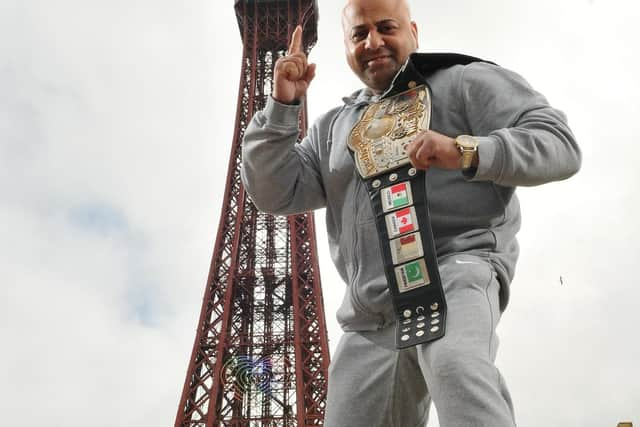

The 53-year-old is one of Blackpool’s most famous grapplers – his reputation built on four decades involved in the sport.
Very much a minority sport in the modern day, wrestling enjoyed a golden age in the late 1970s and 1980s.
Who can forget household names like Big Daddy and Giant Haystacks occupying primetime spots on our television screens on Saturday afternoons?
They certainly made a lasting impression on young Khan who was all too aware that Blackpool was very much a hotbed of the sport in England.
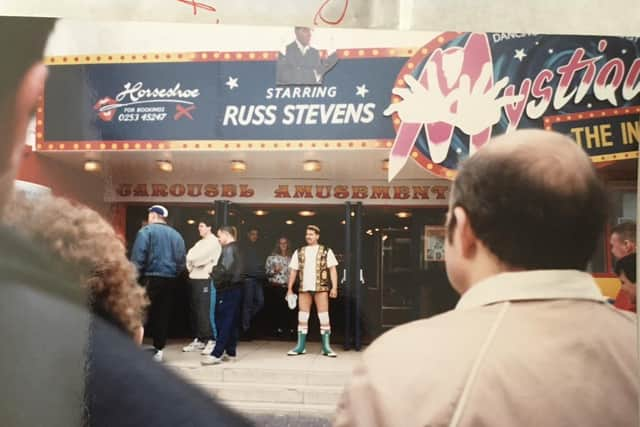
Eager to try his luck at making a wrestling name for himself, he would become a regular face from an early age at the Horseshoe Show Bar situated at the Pleasure Beach.
The public wrestling challenge booth was where trained professional wrestlers took on all-comers – attracting huge crowds to watch the action unfold..
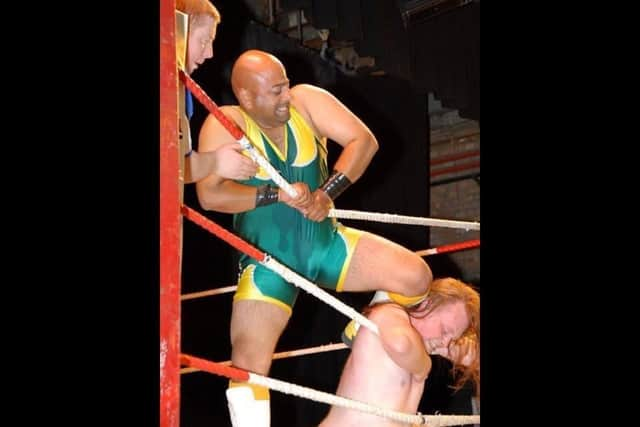
Khan was both hooked and fascinated by the concept of ordinary members of the public taking on a trained wrestler – and was determined to have a slice of the action.
At the age of 14, he approached one of the wrestlers Dave Duran, while still dressed in his Highfield High School uniform, asking how he could become a wrestler too.
Duran advised him to learn a martial art which would ultimately give him the grounding for a career in the sport.
“The public wrestling challenge booth started in 1978 by the late local wrestler Tony Francis,” said Khan.

“Then ex-wrestler-turned-promoter, the late Bobby Baron took over and held seasonal weekend shows.
“There were a variety of male and female wrestlers who appeared, including international wrestlers such as PN Neu, Mighty John Quinn, future WWF star Steve ‘William’ Regal and ladies’ champion Klondike Kate.
“Dave Duran was responsible for making sure the troupe of wrestlers stayed in tip-top condition.
“Members of the public were invited to select a wrestler of their choice and step into the ring for cash prizes.
“They would get £10 per round, £50 per three rounds, £100 for a knockout.
“It was reputed to be the very last known carnival challenge booth not only in the UK but worldwide as these type of shows were popular on fairground attractions.
“Challengers consisted of boxers, amateur wrestlers, judo players, martial artists, rugby players, nightclub bouncers, hockey players, absolutely anyone was allowed and each challenger signed waivers before entering the ring.
“Contests were very physical, violent and security was on hand to prevent major disturbances outside the ring.
“Often friends of the challengers would jump into the ring to help their friends against the wrestler which would often lead to the wrestler having to fight all individuals who stepped forward.
“Any losses by each wrestler, the prize money would be deducted from their daily wages.”
Harmed with the knowledge handed to him by Duran, Khan enrolled at local judo classes held at the Commonwealth Sporting Club, training under the guidance of Blackpool heavyweight judo star Bill Etherington.
“Bill would teach me how to break fall and various holds and techniques,” he said.
“After winning some belts and gradings I met up with Duran to see if he could assist me in getting started.
“Duran was someone I admired as he was always wrestling on international shows and his style of wrestling was as a heavy hitter, solid and very powerful.
“He had an aggressive style of wrestling and I wanted to be just like him.”
Duran eventually introduced Khan to promoter Baron who was always looking out for newcomers to join his troupe of wrestlers.
Before he could get in the ring, Baron informed Khan that he would have to prove to him how much he wanted to be a wrestler.
He added: “For the next three summer seasons, I would help put the ring up and then before the crowds would fill the venue, Duran would show me various holds and techniques.
“Then when the shows were under way, I would be among the crowds putting my hand up to challenge a wrestler .
“For those next three seasons I would take a lot of punishment, pain and suffering often with sprained ankles from being picked up and body slammed hard into the ring canvas and most weekends I’d be going home battered and bruised.
“This was the initiation and it showed the other wrestlers and the promoter just how much respect you had for the sport and how tough you were in taking punishment especially at this type of show.
“After enduring these tough times, I was then enrolled as a full-time professional wrestler and became a carnival prizefighter.”
With Khan’s parents hailing from Pakistan, he was given the moniker of “Kashmir Kid” and was handed a golden jacket with sequins complete with a turban.
He said: “In the seven summer seasons I competed at the public challenge booth, I lost about 10 times and this was in the first one or two seasons. I took many beatings, a lot of pain and punishment.”
With his reputation growing as a wrestler, doors began to open for him and he would appear on the same shows as some of his idols as a kid.
“Myself and Dave Duran would perform on local wrestling shows held at the Winter Gardens and Maggie Mays Showbar on Central Pier, he added.
“Some of the wrestlers I was now either wrestling against or sharing a dressing room with were those very same wrestlers that I used to watch on TV on a Saturday afternoon on World of Sport such as Giant Haystacks, Kendo Nagasaki and Johnny Saint.”
It was at the Horseshoe that Khan met one of the all-time wrestling greats, WWE superstar and Hollywood A list celebrity “Stone Cold” Steve Austin.
“He was in the UK on tour with the American promotion company World Championship Wrestling,” added Khan.
“He was a guest of fellow wrestler Steve William Regal. We shook hands and exchanged pleasantries.”
The public wrestling challenge booths ceased to exist in the early 1990s and Khan began to appear on shows around the UK.
In 1998, he was selected to compete in Dubai where, in front of a 20,000 strong crowd, he was crowned the Wrestling Champion of Kashmir.
Now retired, Khan is proud of what he has achieved as a professional wrestler and the role Blackpool has played in his career.
He said: “Blackpool had a very rich history of professional wrestling with so many top stars appearing at venues like the Tower with local wrestlers topping the bill such as father and son team Jack and Dominic Pye.
“Big Daddy – aka Shirley Crabtree – used to be a Blackpool lifeguard and it was his brothers, Max and Brian Crabtrees, who promoted the local shows.
“Many of the future WWF wrestlers actually came over to the UK in the 70s and 80s to learn the British style of wrestlers because they respected the way the Brits competed.
“The sport of wrestling has opened a lot of doors for me and I am grateful to all my peers and supporters including the community of Blackpool, many of whom had come to the local venues in our town to watch me perform.
“If it wasn’t for the town of Blackpool and the facilities and the entertainment factor that the town has, I would have more than likely never become a professional wrestler.”
Khan is looking to revive his wrestling academy. If anyone is interested in learning the sport, then please contact him via his email address which is [email protected]