
Talking Sport: There was a method to madness of legendary former managers
Talking Sport with Craig Salmon
Flamboyant former football manager, the late John Bond had a certain way of getting his point across to his players.
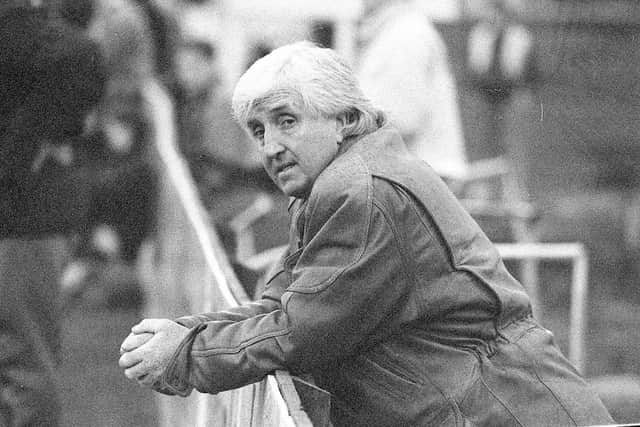

A right-back of some repute in his playing days, he made nearly 400 appearances for West Ham United between 1950 and 1968.
Following the end of his playing career, he moved into coaching and was handed his first managerial role at Bournemouth before being headhunted by Norwich in 1973.
Despite suffering relegation with the Canaries, he guided them back to the old Division One in his first full season at Carrow Road as well as an appearance in the League Cup Final at Wembley where they were beaten by Aston Villa.
Bond kept the Canaries in the top flight before Manchester City came calling for his services in 1980.
The highlight of his three-year stint at Maine Road was another Wembley appearance, this time in the FA Cup.
It was the famous Ricky Villa final – the Argentinian scoring that mesmerising winning goal to help Tottenham Hotspur beat City in a replay 3-2 after the original tie had ended all-square at 1-1.
After leaving City, Bond struggled to replicate his success at clubs such as Burnley, Swansea City and Birmingham City.
His reputation was that of a flashy, larger-than-life character with a penchant for jewellery, designer suits and cigars.
But talk to players who worked under him, they will tell you he was an attack-minded coach ahead of his time who encouraged his men to express themselves as individuals.
Apparently, one of his favourite party pieces was to smash tea cups and saucers into smithereens on the dressing room floor.
The psychology behind the act was to show his players that it was easy to be a destroyer and that being creative was the hardest part of being a footballer. Being able to boot the ball into row Z in the stands to prevent an attack was a lot easier than delivering an inch-perfect pass which could lead to a goal.
His message was simple; that he would always encourage his men to attack, be creative and look to win football matches.
Bond was from an era of managers who, when compared to their modern equivalents, paid a little less time on shape and tactics, but focused a lot on mentality and providing a platform to help players express their gifts.
Of course, legendary former Nottingham Forest and Derby County manager, the late Brian Clough was the master of psychology as two European Cup and two league titles with those provincial clubs would attest.
There are plenty of stories on social media from former players talking about Cloughie’s unusual and eccentric methods.
I will always remember the 1991 FA Cup final when his Forest side faced Spurs at Wembley. Clough took a seat three rows back on the old wooden benches which used to house the managers, coaches and substitutes on the half-way line underneath the Royal Box.
When the match went to extra-time, Clough remained unmoved on the bench while his opposite number Terry Venables ran on to the pitch to give some frantic instructions ahead of the extra 30 minutes.
I assume Clough’s thinking was that his laissez-faire attitude translated as giving his players freedom to just play how they saw fit.
The method did not work on that occasion as Spurs ran out 2-1 victors, thus denying him the one major honour which eluded him throughout his career.
Times have changed to the extent that managers and coaches are virtually a constant presence on the touchline now.
In the case of someone like Arsenal boss Mikel Arteta, he’s like a conductor, with his team the orchestra; constantly gesticulating and directing his players when to press and when to drop.
Personally, the modern game feels almost too micro-managed with possession of the ball coveted above of all else.
Passing the ball backwards and sideways is actively encouraged, the thinking being that if you have control of the ball then you have control of the match.
But going back to Bond and his tea cup and saucer smashing, we saw in England’s second group match in the 2026 World Cup against Ghana, in Boston, how easy it is for a group of supremely organised, fit and strong men to be destroyers.
Set up in a low-lying block by manager, Sir Alex Ferguson’s former assistant Carlos Queiroz, the African nation made their intentions known from the first whistle. Their tactics against England incensed some pundits, who have suggested that the low block should, somehow, be outlawed.
But what transpired was a game of chess, with the Three Lions almost pedestrian with the ball as they were met by a wall of deep-lying Gold jerseys, suffocating the space in their final third. The match eventually finishing in a 0-0 stalemate.
What it needed was someone like a Paul Gascoigne to grab the game by the scruff of its neck, carry the ball forward and commit players; be creative.
It would be interesting to think how Gazza would have been used in the risk-averse modern game. Would his unique talents have been coached out of him?
Certainly England boss Thomas Tuchel is keen for his team to play a higher-risk, fast-paced game more akin to what historically English supporters are used to watching in the Premier League.
That was clearly more evident in the respective 4-2 and 2-0 wins over Croatia and Panama, albeit against teams set-up tactically with more ambition than Ghana.
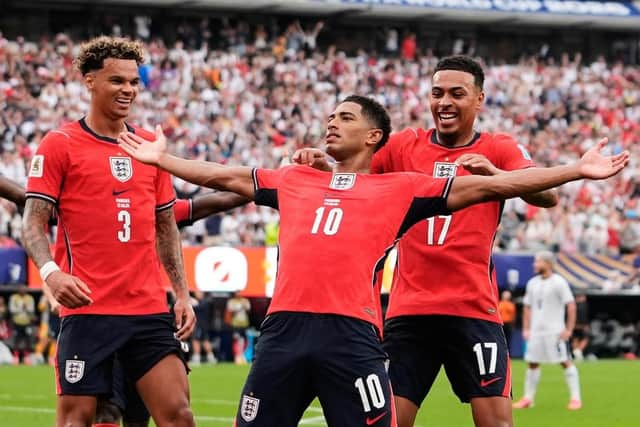
Jude Bellingham feels like someone of the Gazza mould, a slightly deeper role perhaps suiting him better. He has been the Three Lions’ most effective player during the group stages.
Hopefully, there is much more to come from him for the last 32 clash against DR Congo on Wednesday in Atlanta.