
'Seaside Specials' is a history of railway excursions - the life blood of Blackpool tourism for 150 years

Railway excursions were the lifeblood of Blackpool’s holiday trade for almost 150 years. Now, a new book Seaside Specials, produced by Blackpool and Fylde Rail Users’ Association provides an evocative reminder of the excursions from the industrial hinterlands of Lancashire, Yorkshire and Scotland that brought hordes of day-trippers to Blackpool and its satellite resorts.
Excursion trains helped transform the lives of millions of working-class Lancastrians, and the fortunes of emerging holiday resorts such as Blackpool.
Before the arrival of the passenger-carrying railway in 1825, travel had been the preserve of the rich.
The railway excursion changed all that, opening up the possibilities of travel to ordinary people, at reasonable cost, though not always in the most comfortable conditions.
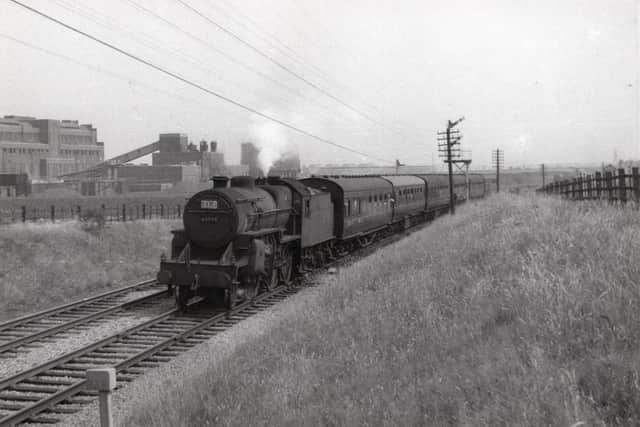
Excursions began with the birth of the railway, flourished through the peaks of the Victorian era and first half of the 20th century, and even continued under the newly nationalised British Railways from 1948.
After the restrictions of wartime and its immediate aftermath, the market for seaside holidays and awaydays surged back in the 1950s.

No one can be sure when the first railway excursion ran, but it was certainly before Thomas Cook’s famous pioneering outing in 1841, taking 570 temperance supporters and their families from Leicester to Loughborough.
Cook had an early connection to the Fylde Coast. Spurred on by his initial success, he arranged his first tour to the Scottish Lowlands in 1846. This was before the construction of the railway line over Shap Fell, so passengers had to travel from Leicester to the new port of Fleetwood by rail, then by steamer to Ardrossan, where trains took his customers on to Glasgow and Edinburgh – all for the price of a guinea (£1 1s) per person.
Since then, excursion trains have carried countless passengers to the seaside, political rallies, sporting competitions and many other events.
One of the earliest railway excursions in the Fylde – and indeed in Britain – took place on July 3 1842 when a special train conveyed 2,364 Sunday School pupils and teachers from Preston to Fleetwood in 27 coaches behind the Preston & Wyre Railway’s locomotive No 1. The savvy Sunday School teachers had negotiated a half-price fare deal. Hymns were sung throughout the journey.
There was a half-hour stop at Poulton-le-Fylde where, according to the Preston Pilot newspaper, ‘the scene was truly inspiring, each carriage being studded with numerous colours bearing appropriate mottoes. Such a display was never afforded before to the inhabitants of Poulton…’
Two years later the Preston & Wyre joined forces with the Bolton & Preston and Manchester & Leeds Railways to run excursions right through from East Lancashire.
The P&WR was probably the first rail company to actively promote excursions.
Within four years of that first Sunday School trip to Fleetwood, a single-track branch line was built from Poulton to the new Talbot Road Station in Blackpool in 1846.
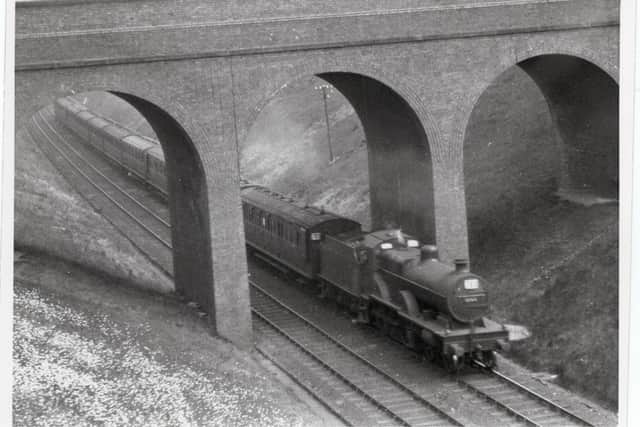
Trade unions were another major source of traffic for excursions. In 1919 the Lancashire and Cheshire Miners’ Federation staged its annual ‘Joy Day and Demonstration’ in Blackpool. In total, 135 trains carried 100,000 miners and their families.
The volume of excursion and scheduled trains arriving at Blackpool’s two main stations was phenomenal. The total number of passengers reaching Blackpool and its sister resorts by rail was almost six million a year.
After the Beeching report of 1963, BR rapidly divested itself of many of these surplus carriages. By then the annual summer surge was already dwindling as holidaymakers switched to the roads or package holidays abroad.
* Seaside Specials: Rail Excursions to Blackpool and the Fylde Coast is published by The Progressive Press at £10.95 (ISBN 978-1-0369-7245-5), email: [email protected]