
9 fashion stores you'll remember shopping at in the 70s, 80s and 90s that disappeared from the high street

They were once high street giants, with thousands of branches between them
- These fashion giants helped to dress the nation
- They had thousands of branches between them and even gave us a famous British saying
- But, having ruled the roost during the 70s, 80s and 90s, they all disappeared from the nation’s high streets
Whether it was the latest dress, a fancy suit or some glamorous shoes you were after, these retail giants would see you right.
They had a huge say in what we wore during the 70s, 80s and 90s, when they were among the biggest names on the British high street.
From ‘cheap and cheerful’ clothes to the latest trends hot from the Parisian catwalks, they offered a huge variety of choice.
But having once had thousands of branches between them across the UK, they have all vanished from the nation’s high streets.
Some have disappeared completely, while in other cases the name lives on and they are still trading online.
How many of these famous high street fashion chains do you remember?
C&A
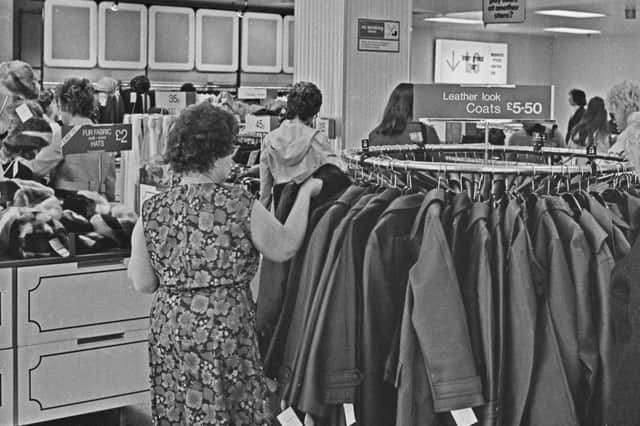

The famous Dutch brand is still a major player in the global fashion trade, but is no longer found on Britain’s high streets.
It had operated in the UK from 1922 until 2001, with more than 100 stores across the country.
The popular, budget-friendly store even featured in The Specials song, Man at C&A.
The ‘Man in C&A’ from the song is an everyman who feels powerless to stop the seemingly inevitable political march towards nuclear armageddon, but the phrase became shorthand for somebody lacking in fashion sense.
Topshop
Topshop began life in 1964 as a youth brand within the Sheffield branch of the Peter Robinson fashion chain.
It became a behemoth of the British high street and at its peak had more than 500 stores worldwide.
But after its owner, Arcadia, went into administration in 2020, all the shops closed.
The Topshop brand survived online, however, and is making a return to the high street from February 2026, when it will be sold at 32 John Lewis branches.
Dorothy Perkins
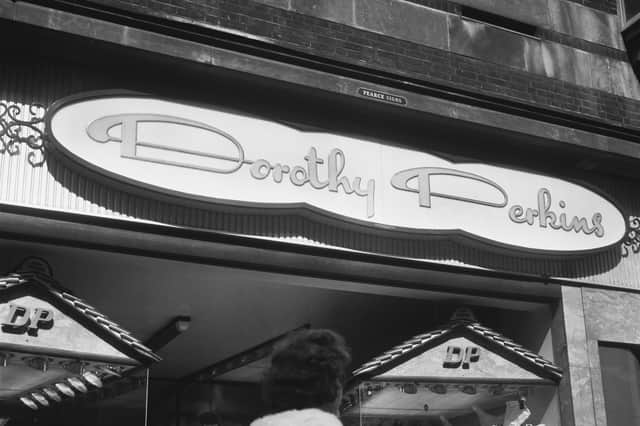
Dorothy Perkins was another casualty of the Arcadia Group’s slide into administration.
It was founded in 1909 as H. P. Newman, before changing its name to Dorothy Perkins - not after a real person, but the popular variety of rambling rose - in 1919.
It was initially best known for selling lingerie, tights and nightwear, before branching out into more general fashion.
The supermodel Helena Christensen became the face of the brand in the 90s, and in 2012 the Kardashian sisters, Khloe, Kourteney and Kim, launched their own ‘Kollection’ at Dorothy Perkins.
The shops closed following the collapse of Arcadia, though Dorothy Perkins has continued to trade online.
Dolcis
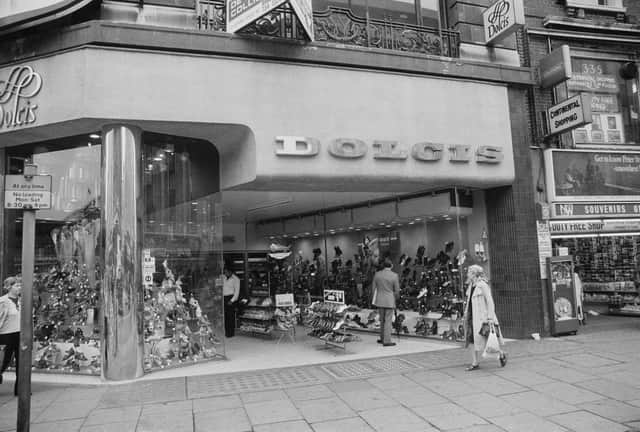
The famous shoe brand began life on a street barrow in Woolwich in 1863 and grew to become one of the UK’s biggest footwear retailers.
By the 50s, it boasted 250 stores across the country. By the late noughties this had dwindled to 65, though it also had around 150 concessions.
The Dolcis shops closed after the firm went into administration in 2008, with some being bought and rebranded as Barratts, but it still trades online and through other retailers.
Wallis
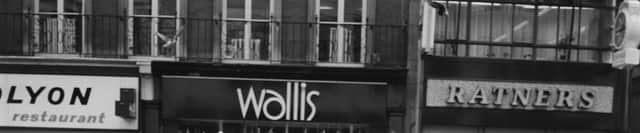
Wallis began life in London in 1923 and was known initially for its coats and dresses. Its famous slogan was: “Comparison invited. Competition defied.”
It was particularly popular during the 60s and 70s, when it made the latest fashions from the Paris catwalks available to the ordinary shopper on the British high street.
At its peak, the womenswear giant had more than 250 stores and concessions in total.
It was another casualty of the Arcadia collapse in 2020, but, although the brand disappeared from the high street, it has survived online.
Adams Kids

Adams Kids was a major children’s fashion brand during the 80s, 90s and noughties.
The firm was founded by Amy Adams in Birmingham in 1933 and remained independent until 1973, when it was sold to Foster Brothers.
By the 1980s, it had more than 200 stores around the UK, and in the 90s, it began expanding internationally.
In August 2001, plans were announced to double in size within the next four years, but things went rapidly downhill in the noughties.
Scores of stores closed after Adams went into administration in 2006 and 2008, and the final stores shut after it went into administration for a third time, in 2010.
Etam and Tammy Girl
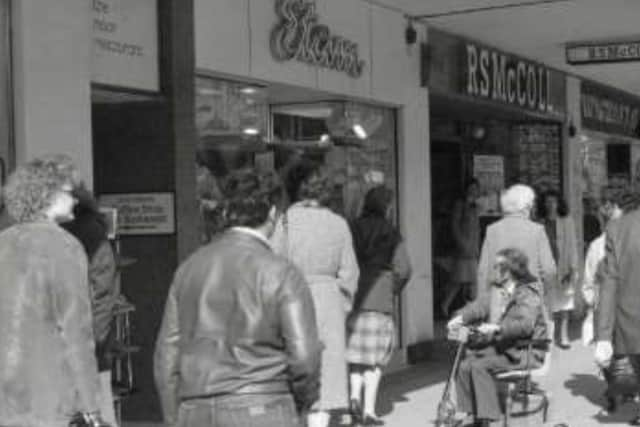
Etam was founded in Berlin in 1916 and the first British store opened in 1923.
The firm, which developed a reputation for ‘cheap and cheerful’ fashion, had more than 100 shops across the UK by the mid-80s and by the mid-90s. that number had more than doubled.
In 1975, the spin-off Tammy Girls, targeting tweens and teenagers, opened.
Etam was bought in 2005 by Philip Green and the name disappeared from the British high street, with some branches sold to Monsoon and others becoming Dorothy Perkins or Topshop stores. Tammy Girl, meanwhile, became part of BHS.
Etam stores are still found overseas, but the brand operates online only in the UK.
Burton
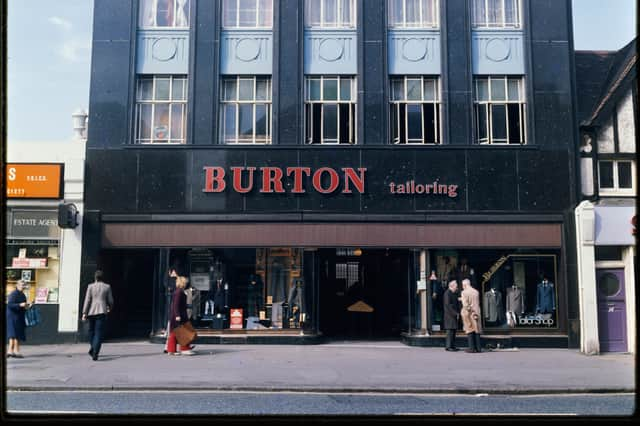
The former menswear giant was founded in 1903 by Sir Montague Maurice Burton, and by 1929, when it was first listed on the London Stock Exchange, it had 400 stores, factories and mills.
The popular phrase ‘the full monty’ is believed to have come from a shortening of Sir Montague’s name, after his firm was chosen to supply suits, including not just the jacket and trousers but the shirt and even underwear, to servicemen demobilising after World War II.
The firm’s name may also be the origin of the saying ‘gone for a Burton’, which was originally a euphemism for pilots failing to return from a mission, though there are other theories.
In 1966, Burton was the official World Cup supplier to the triumphant England men’s football team.
The company was bought by Philip Green in 2002 and became part of the Arcadia Group.
All the stores were closed after Arcadia went into administration, but the Burton brand was bought by Boohoo.com and continued to trade online.
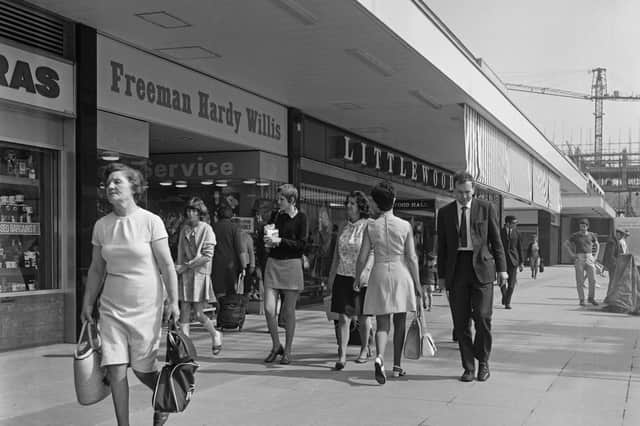
This footwear giant was founded in 1875, taking its name from three employees, and once had more than 500 branches across the UK.
The chain famously claimed to provide ‘shoes for all the family’, while the retailer’s bags carried the phrase ‘For Happy Walking’, based on its initials.
In the 90s, half of the branches were converted to Hush Puppies shops and the rest were sold to Stephen Hinchliffe, whose business subsequently collapsed.
Freeman Hardy Willis, as it was later known, ceased to exist in 1996 but the iconic name was revived in 2020 as an online-only brand.
Which fashion store of the 70s, 80s and 90s do you miss most?
If you enjoyed this look back at the shops of yesteryear, you might like our retro photo gallery celebrating another lost high street giant.