
Shocking percentage of vapes laced with spice drug sold to Lancashire schoolchildren revealed

Up to 25% of vapes confiscated in secondary schools in Lancashire have been found to contain the synthetic drug “spice,” according to a new study.
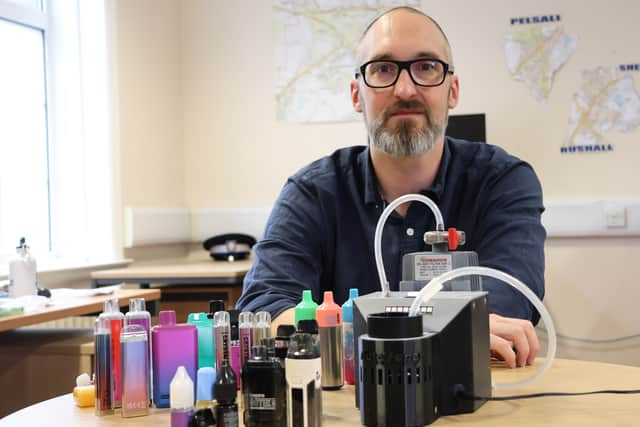
Researchers from the University of Bath analysed 1,923 e-cigarettes and e-liquids collected from 114 schools across seven regions in England.
Overall, 13% of all samples contained spice, but in Lancashire and London the figure rose to around 25%.


The study, led by Professor Chris Pudney, also found spice-laced vapes are easily available online, often sold as THC – the active ingredient in cannabis – despite actually containing spice, a cheaper and more dangerous substance.
Researchers tracked 120 TikTok accounts and 83 Instagram accounts offering THC-labelled vapes for sale and found nearly 70% of TikTok accounts and more than 50% of Instagram accounts were actually selling spice.
Prof Pudney said: “Spice is much cheaper than THC. Young people think they’re buying cannabis but are being pushed a highly addictive drug with serious health risks, including psychosis, seizures and heart problems.
“Accounts selling these vapes are trivially available on social media.”
The study warns that as social media platforms attract younger users, the likelihood of spice being sold as THC increases – 12% on Facebook compared to 68% on TikTok.
Despite researchers raising the issue with platforms in March 2025, around 70% of tracked accounts remain online and easily accessible.
The research calls on Ofcom to enforce the Online Safety Act, compelling social media companies to remove illegal drug sales.
Under the act, Ofcom can issue fines of up to £18 million or 10% of global annual revenue.
Fiona Spargo-Mabbs, chair of the Drugs on Social Media working group, said: “As the new academic year begins, we are very concerned that teenagers will continue to be exposed to spice due to the ongoing visibility of vapes marketed as THC online.”
The study involved multiple institutions, including the University of Bath, University College London, University of Glasgow, Manchester Metropolitan University, Teesside University, University of Bristol and the Daniel Spargo-Mabbs Foundation.