
RAF chief issues major update on next gen fighter jets as BAE Warton and Samlesbury look to future

“This is exciting and necessary in equal measure."
The next-generation fighter jet being developed by Britain could be the last crewed combat aircraft the UK ever builds, the head of the RAF has warned, as advances in artificial intelligence and autonomous technology reshape military aviation.
The comments have particular significance for Lancashire, where BAE Systems employs thousands of people at its Warton and Samlesbury sites, which play a major role in the development and production of Britain's combat aircraft.
Air Chief Marshal Sir Harv Smyth said artificial intelligence-enabled, uncrewed aircraft would "transform military aviation".
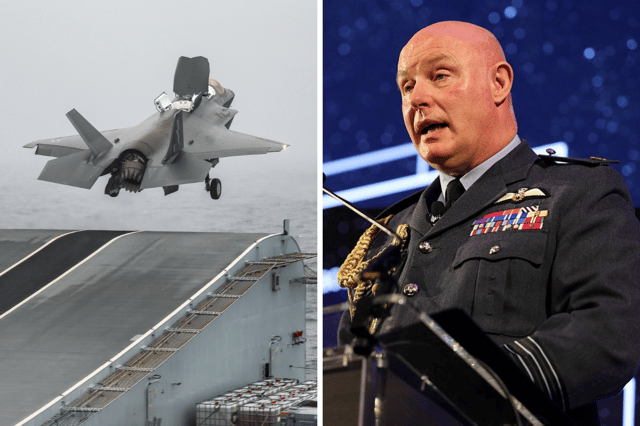

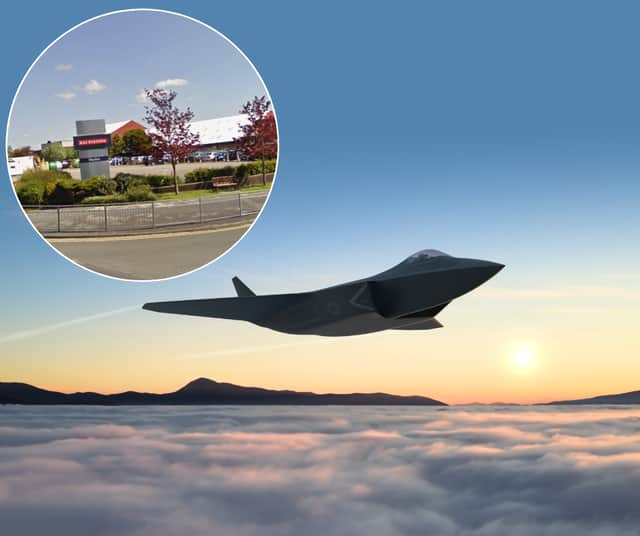
He was referring to the Global Combat Air Programme (GCAP), a partnership between the UK, Italy and Japan to develop a sixth-generation fighter jet, commonly known as Tempest, which is expected to enter service by 2035.
Writing in the Telegraph, Sir Harv described the aircraft as "perhaps the last crewed fighter we will ever build", explaining that this was not because people would become less important, but because technology was changing the nature of aerial warfare.
The Tempest is expected to feature advanced stealth capabilities, sensors and artificial intelligence designed to support its human pilot during periods of extreme stress or when they are overwhelmed.
Sir Harv said AI and machines would take on "the most dangerous tasks instead of humans", while emphasising that technology should enhance human judgement and "not replace accountability".
He added: "Uncrewed fighter jets will start flying in UK airspace next year. This is exciting and necessary in equal measure."
You’ll get unlimited access to every premium article, daily puzzles and an ad-lite experience. New subscribers only. Offer ends Thursday 3 December.
Visit here for more information.
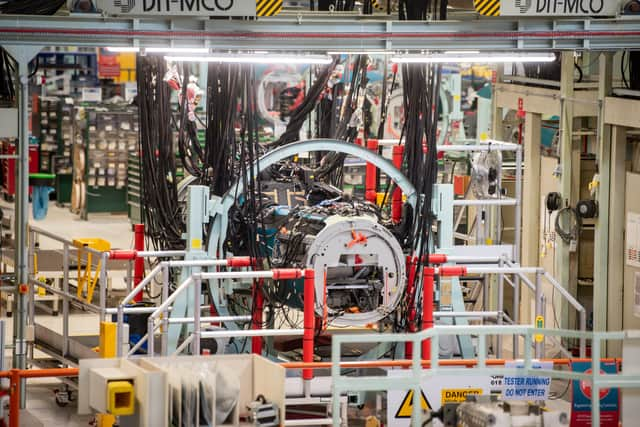
The RAF chief also outlined a future force combining Typhoon and F-35 aircraft with autonomous systems. Both the Typhoon and F-35 programmes have strong links to BAE Systems' Lancashire operations at Warton and Samlesbury.
A BAE Systems spokesperson said: “The Chief of the Air Staff’s vision reflects the future of combat air, where advanced crewed aircraft and autonomous systems operate together as an integrated force.
“Through programmes such as Typhoon, F-35, next generation Tempest and advanced uncrewed systems such as Brontanax, we’re helping deliver the technologies and capabilities that will keep the Royal Air Force at the forefront of combat air power for decades to come.”
Subscribe for FREE for all the latest videos from the Blackpool Gazette
Subscribe for FREE here
BAE Systems recently confirmed that they are ‘exploring opportunities to potentially reduce up to 1,070 roles’, including jobs at both their Warton and Samlesbury bases.
The aerospace, defence, and information security company says it informed employees of an ‘ongoing focus on enhancing our agility and competitiveness’ today, with the Unite Union claiming that staff were informed of potential job losses at 4pm on November 18.
The company said that the 1,070 roles at risk are spread across the BAE Systems Head Office located at Stirling Square, 6 Carlton Gardens in London, and their Air Sector business, which is based out of the Warton and Samlesbury sites in Lancashire. BAE says approximately 940 roles within the Air business are at risk.
The news comes off the back of a period of strong growth at BAE Systems, which has benefited greatly from increased defence spending in the four years since Russia's invasion of Ukraine in 2022.
Earlier this month, the company - which employs around 13,700 people in Lancashire - revealed its 2026 trading results, with Chief Executive Charles Woodburn announcing a ‘strong financial and operational performance’ and outlining £33bn of orders secured so far and free cash flow up by £1bn to around £3bn.