
What the public thought of the potential closure of 10 Lancashire care homes and day centres
Families and local communities were asked for their thoughts on what should happen to the services.
More than three quarters of people who responded to a public consultation into the future of 10 elderly care facilities in Lancashire were opposed to their possible closure, it has been revealed.
Lancashire County Council put five of its residential homes and five day centres under review last October amid concern that some of the buildings were in “significantly poor condition”.
The authority stressed throughout the survey period – which ended in December – that no pre-determined decisions had been taken to shut any of the sites, in Chorley, Fylde, Hyndburn, Lancaster, Pendle, West Lancashire and Wyre.
However, a series of petitions and protests nevertheless sprang up in defence of the services, which were being considered for what County Hall described as “reprovision”.

The ruling Reform UK group declared in January that it had opted to invest in the homes, not close them – saying that it wanted to make its intentions clear ahead of a planned spring announcement, in order to end what it claimed was “scaremongering” by opposition politicians. But a question mark has since continued to hang over the future of the day centres.
The outcome of the consultation will be put before a cabinet meeting next Tuesday (19th May), along with a document setting out how the authority plans to draw up a new “model of care” for all of its adult social services – not just the 10 facilities recently put under the microscope.
The consultation results reveal that 76 percent of the 1,505 respondents were opposed – the majority strongly – to the prospect of reprovision, which would have involved relocating residents and day centre users to “more suitable settings”.
Asked about the reasons for their opposition, 445 of the 1,249 people who responded to the follow-up question cited the “effective service” currently being provided by the facilities – which were regarded as a “lifeline”.
The alternative option of refurbishment was considered by almost 300 respondents to be “an opportunity to improve, enhance and modernise” the services, while more than 230 expressed concerns about the impact any reprovision may have on the health of care home residents, especially those suffering from dementia.
County council analysis of the feedback identified a major theme as the recognised “value and ongoing need [for] care homes and day centres in Lancashire and [the fact that] a clear, evidence-based plan is required for any changes”.
It added: “Moving settled residents from care homes to other places…is viewed as potentially damaging. Relationships with long‑serving staff, maintaining routines and the importance of family being able to visit [are] considered important.
“Day centres are seen as vital for social connection, carer respite and preventing isolation and avoidable hospital admissions.”
Cabinet members will be told that the authority intends to explore how “underused” day service buildings can fulfill their full potential. That will involve working with voluntary, community, faith and social enterprise groups to trial “a more flexible, community-based day model, offering varied, accessible activities at different times of the day and at weekends”. However, there will be no changes to existing daycare services during the so-called “test and learn” process.
The cabinet will also be asked to approve the strategy for developing the overarching new care model, which will be “co-produced” with the public to ensure it is “rooted in what local people want”. That work is expected to be completed by September – the same point by which the authority has previously said a business case relating to the 10 reviewed facilities will be ready.
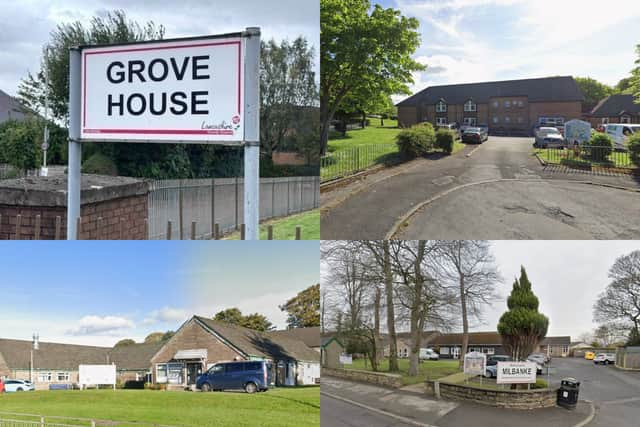
Those services are the residential homes Favordale (Colne), Grove House (Adlington), Milbanke (Kirkham), Thornton House (Thornton-Cleveleys) and Woodlands (Clayton-le-Moors), and the day centres Byron View (Colne, attached to Favordale), Derby Centre (Ormskirk), Milbanke (Kirkham, attached to Milbanke care home), Teal Close, (Thornton-Cleveleys, attached to Thornton House) and Vale View (Lancaster).
Byron View and Teal Close have already been shut for nearly six years, after closing their doors at the start of the pandemic in 2020. However, their closures are still officially deemed only temporary – and their permanent status is subject to the outcome of the review.
Azhar Ali, leader of the Progressive Lancashire opposition group at County Hall – an alliance of independents and the Green Party – welcomed the planned next steps towards the new model of care, but said that time could have been saved – and the heartache of families spared – if the same principles had been adopted as the basis of the reprovision review.
“We’ve wasted more than six months, because the administration took the wrong approach to the challenges we face around adult social care, particularly [regarding] our care homes and day centers.
“The opposition were literally asking for co-production – working with service users, and their families – from day one. Now they say they are going to do exactly that.
“We were also promised the updated condition surveys [for the 10 buildings under review] – but they still haven’t been put in the public domain,” County Cllr Ali said.
However, Lancashire County Council leader Stephen Atkinson said the whole process to date had revolved around a desire to listen to the views of those who would be affected by any changes.
“We held the consultation to understand what people thought was most important to them around the future of adult social care.
“Our approach was actually welcomed by the Minister of State for Care, Stephen Kinnock MP, who recognised the council’s transparent and resident‑focused approach.
“Consultation is a form of co-production in its own right and I would like to thank everyone who took part as they have helped to shape what happens next.
“We are committed to being transparent and listening to what people tell us so we can make the right decisions. This process is simply too important for us to rush,” County Cllr Atkinson told the Local Democracy Reporting Service.
Meanwhile, Helen Coombes, executive director for adults, health and wellbeing at Lancashire County Council, said ahead of next week’s cabinet discussion: “Our priority is that people in Lancashire can live well and independently for as long as possible, with the right care and support around them when it’s needed.
“This report sets out what we heard during the consultation and the strategic direction for developing our new Adult Social Care Model of Care, shaped with people who draw on care and support, carers, our workforce, providers and communities.
“Every decision will start with people’s experience, protecting relationships, continuity and support close to home, and focusing on key areas like dementia care, reablement, respite, supported living for younger adults and community-based day opportunities.
“We’ll work openly with people to develop options, and we won’t bring proposals forward without understanding local impact and completing the necessary assessments.”