
'Blackpool will drain resources from Wyre and Fylde - but new council can thrive’, district leader says
The Fylde coast is set to become one big council family.
A new standalone council for the whole of the Fylde coast can be a success – in spite of Blackpool likely acting as “a drain on the resources” of the two other areas that will be served by it.
That was the verdict of Wyre Council leader Michael Vincent, who said the new authority would also have to overcome a raft of difficulties inherent in the overhaul that was bringing it about.
He was speaking in the wake of the government’s announcement last week that Lancashire will be split into four new council areas from April 2028 as part of the biggest change to the local authority landscape in the county for more than 50 years.
Its 15 main councils will disappear and be replaced with standalone ‘unitary’ authorities – including one incorporating Wyre, Fylde and Blackpool.
Cllr Vincent stressed he had never supported the principle of the government-ordered shake-up, which will end the ‘two-tier’ split that exists across most of Lancashire and sees delivery of local services divided between the county council and a dozen district authorities, of which Wyre and Fylde are two.
The new councils will be so-called ‘unitary’ authorities – as Blackpool has been since 1998 – responsible for all services in their patch.
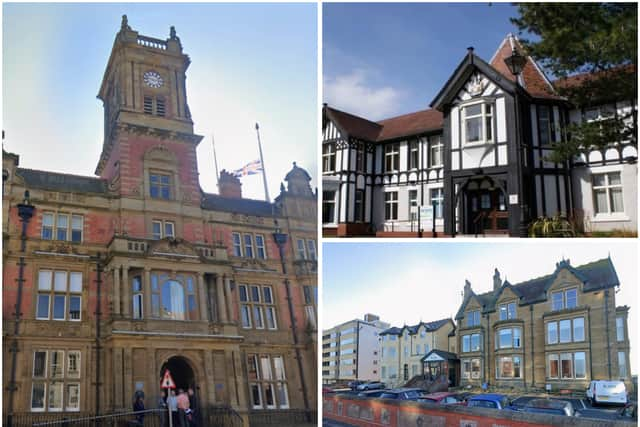

Wyre’s Conservative leader told The Gazette that notwithstanding his concerns over Blackpool’s impact on the budget of the provisionally-named ‘Fylde Coast’ council, he was hopeful that the new set-up could be made to work.
“If [the new council] is run well, I think that can be mitigated and it can thrive.
“It does also address some of the issues with Blackpool being run so independently and not really working with anybody [else] – so I think Fylde and Wyre tourism can probably benefit from this,” Cllr Vincent said.
Lancashire’s existing authorities had been asked to put forward proposals for the size and shape of the organisations that would replace them. Neither of the two suggested between Wyre, Fylde and Blackpool were chosen.
Wyre and Fylde had proposed merging not just with each other and Blackpool, but also Lancaster, a move that would have carved the wider Lancashire into three.
Blackpool had suggested a four-way split – but not the one that was ultimately chosen by the government. The authority’s blueprint envisaged Blackpool hooking up with Preston, Fylde and western Wyre, including Fleetwood.
Cllr Vincent said that any potential benefits from a single-tier structure had been made more difficult to realise by the decision to create three new authorities rather than four.
“We supported the three bid because it would be more financially stable than four. I don’t accept what the government has said about [the four model] being the best for economic development, because their own process was based on [a report by] Price waterhouseCoopers that said four unitaries would cost money [rather than save it].”
Cllr Vincent also predicted that giving birth to the new authorities was going to be a “really difficult” process – not least because of the need to redistribute the county council’s debt amongst its successors. When a similar reorganisation took place in Northamptonshire, he said that it took five years to agree how the debt should be shared.
He also warned that the exiting presence in the new Fylde coast council area of two authorities that provide top-tier services like social care – Lancashire County Council for Fylde and Wyre and Blackpool Council in that authority’s patch – would make what is known as the ‘disaggregation” of those services into the new organisations “extremely complicated”.
However, he added that it was now Wyre Council’s “responsibility to secure the best possible outcome for the residents and communities we represent.”
“That means engaging constructively in the process while robustly protecting local services, taxpayers and the distinct identities of the towns and villages across Wyre and the wider Fylde coast,” he concluded.
The Gazette asked to speak to Fylde Council leader Karen Buckley for her thoughts on the new authority of which her district will become a part.
In a statement, the Tory leader reminded locals of the council’s opposition to the revamp – and how it chimed with their own.
“Our residents spoke clearly against this change, as they value our independence, our identity and the close relationship we have with our communities,” Cllr Buckley said.
“Sound financial management and high-quality services is our strength. We remain debt free, as do Wyre Council, but that is about to change.
“Although this is not the route we would have chosen, government has now taken a decision, and our responsibility is to protect Fylde’s interests as the process moves forward.
“Residents can be assured that Fylde’s voice will be heard clearly. We will work hard to secure the best possible outcome for our communities and to make sure the qualities that make Fylde special are not lost in the reorganisation process.”
Wyre Council, Fylde Council and Lancashire County Council will all continue to operate until 31st March, 2028.
The replacement unitary for the Fylde coast – serving 348,000 residents – will come into being in so-called ‘shadow’ form from May 2027 when the first set of elections will be held for it.
The three other new councils that will be created by the redrawing of the local, government map in Lancashire will bind together: Preston, Lancaster and Ribble Valley; Chorley, South Ribble and West Lancashire; and Blackburn with Darwen, Burnley, Hyndburn, Rossendale and Pendle.