
How Fylde families can help a £200m flood defence scheme - just by taking a photo

Families across Fylde are being asked to help protect the coastline - by simply taking a photograph.
Residents can now become “citizen scientists” as part of a major £200 million national flood innovation programme aimed at finding new ways to defend communities from rising sea levels and coastal erosion.
The ShoreLens scheme, launching this month under the wider Our Future Coast project, invites people to snap photos at fixed points along the shoreline.
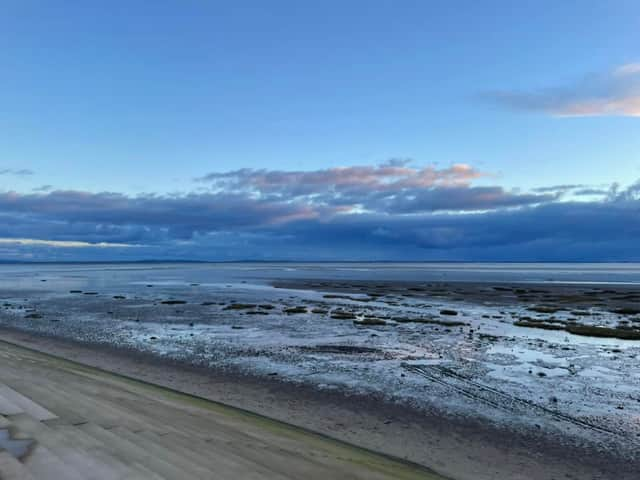

The images will help experts track how sand dunes, saltmarsh and beaches respond to storms, climate change and restoration work.
Councillor Tommy Threlfall, Fylde Council’s lead member for environment, said: “This is a fantastic opportunity for residents to get involved in protecting our beautiful coastline for future generations.
“Every photograph helps scientists understand how our coast is responding to the changing climate, and together we’re exploring innovative ways to work with nature rather than against it.”
The Fylde coast forms part of the Environment Agency’s £200m Flood and Coastal Innovation Programme, which is testing nature-based solutions instead of relying solely on traditional concrete sea defences.
At Granny’s Bay, specialists are trialling biodegradable grids made from potato starch to restore damaged saltmarsh.
The grids naturally break down within five to ten years, trapping sediment and helping plants establish.
Over time, the saltmarsh acts as a natural buffer against flooding while also boosting wildlife habitats and capturing carbon.
Photography posts have been installed at locations including St Paul’s, Granny’s Bay, Fairlawn Road North and South, North Beach and North Prom.
As well as submitting photographs, residents can volunteer as “Saltmarsh Champions”, helping monitor habitats, take part in wildlife surveys and even grow saltmarsh plants as part of restoration efforts.
The wider Our Future Coast project, funded by Defra and delivered with partners including the Environment Agency and Lancashire Wildlife Trust, is working across the North West to test new approaches to coastal flood management.
Experts say it is no longer possible - or affordable - to protect the entire coastline using hard concrete defences alone, meaning communities must learn to work with natural barriers such as dunes and saltmarsh.
Residents can find out more about taking part via Fylde Council.