
Second earthquake hits Lancashire in a month with 2am tremors felt in Silverdale, Morecambe and Lancaster

An earthquake has hit Lancashire for the second time in less than a month.
The British Geological Survey (BGS) reports that a 2.5 magnitude earthquake struck at Silverdale at around 2am this morning (Friday, December 19), with a depth of 3km.
Earlier this month on December 4, the same area was hit by a 3.4 magnitude quake, which caused houses to shake but left no major damage.
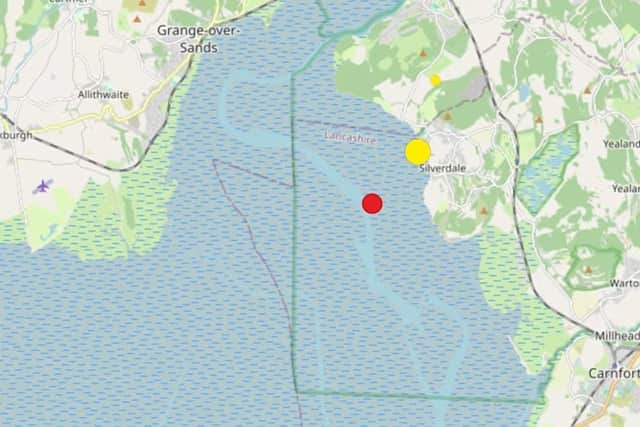

A BGS spokesperson said: "It was felt around Morecambe Bay area. Reports describe 'a quick sharp shaking jolt and made a thunder noise' and 'the radiators and pictures rattled'.
It's understood residents in Silverdale, Heysham, Morecambe, and Lancaster reported feeling some “very weak shaking”.
People from around Lancashire and South Cumbria took to social media to report they had been "woken up in the night" by the small earthquake.
According to the BGS, the driving forces for earthquake activity in the UK are unclear.
They include regional compression caused by motion of the Earth’s tectonic plates and uplift resulting from the melting of the ice sheets that covered many parts of Britain thousands of years ago.
Each year, between 200 and 300 earthquakes are detected and located in the UK. Between 20 to 30 earthquakes are felt by people each year, and a few hundred smaller ones are only recorded by sensitive instruments.
Most of these are very small and cause no damage. However, some British earthquakes have caused considerable damage, although nothing like the devastation caused by large earthquakes in other parts of the world.
A magnitude 4 earthquake happens in Britain roughly every two years. We experience a magnitude 5 roughly every 10–20 years.
Research suggests that the largest possible earthquake in the UK is around magnitude 6.5.