
Businesswoman Elizabeth Walker - creator of many famous waxworks in Blackpool - dies aged 72
A former businesswomen who created many of the waxworks figures and tableaux seen in Blackpool tourist attractions over three decades has died aged 72.
Elizabeth 'Liz' Walker, who also opened two tourist attractions in the resort, died suddenly in the early hours of Thursday October 24.
Aside from opening the forerunner to today’s Madame Tussauds in Blackpool, she and her husband set up many other tourist attractions throughout the North of England and also abroad.
Born Elizabeth Ann Naomi Lenthall in Bridlington, on May 8 1952, she met showman Brian Walker in 1970.

Brian’s family of showmen owned attractions on Blackpool's Golden Mile before and after the War.
In November 1974 Elizabeth and Brian married, and in the following year the pair had an idea to begin to create waxworks attractions together, at the time a new resurgence in the medium was occurring in Britain and America.
By 1977 they had had a son, Wesley, and after Brian returned from the USA, they opened the first Walkers Tussauds Waxworks on Bridlington's Royal Princes Parade, in a remaining sandstone and colonnade offshoot of the Old Victorian pavillion that had stood on the sea outcrop.
The very first waxwork casts the couple created were of Richard O'Sullivan as the then-popular Dick Turpin, and of a '70s-modernised display of Jane Russell in a Western setting, as they explored their techniques..
The waxworks proved a hit and in 1979, Elizabeth and Brian ventured to London, where Walkers Tussauds were responsible for creating The Palladium Cellars for noted producer Michael Carreras at the heart of the West End.
Blackpool venture
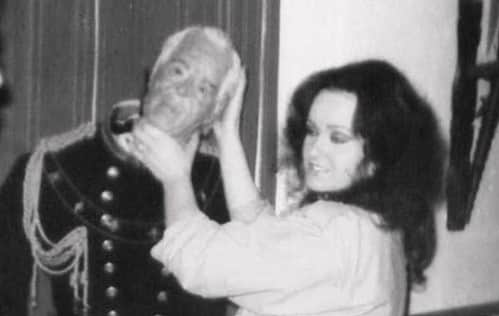
From this, they ventured to Blackpool, where they opened The Movie and Television World of Wax in 1979, which ran into the 1980's. The life mask taken from star Yul Brynner, was put on display in Blackpool for the opening.
While Brian was the showman, Elizabeth was more of an unsung hero who was adept at the sculpting of the wax crania of the famous, from her preliminary drawings and paintings, to the facial cast.

She also became the costumier, created the vast array of intricate and authentic props and set-pieces -- from castle battlements to galleon hulls - and painted the backcloths and scenics.
She even recorded the ambient soundtracks for the audio/visual elements, arranged the tableaux, and did all of the grand signwriting, at first from their original workshop in former stables atop the Bridlington Quay-side.
The creations featured in both permanent and temporary Blackpool establishments, from the Space 1999 and Doctor Who exhibitions of the late 1970s, to the Pleasure Beach, and these were also soon exported to many countries around the world, as north as Iceland and Finland and as far south as Tasmania in Australia. Throughout this busy epoch, and without a pause, Elizabeth was also a housewife and mother.
Over the years, they also restored several old buildings and fortresses in which to authentically house their projects.
In 1980 they placed the proceeds of this early success into opening Mountbattens Nightclub and Restaurant Complex in Yorkshire, on Bridlington's Promenade, at the time the largest building area in the resort under one roof. It also comprised a Discotheque-Nightclub, and a Theatre.
At the same time, they gained British Museum co-operation in the mounting of their Treasures of Tut-Ankh-Amun Egyptian Exhibition, which was then able to augment genuine Egyptian artefacts with accurate facsimiles which Elizabeth created. From 1981, it arranged its venues in cities across Britain, before visiting Blackpool, Leeds, Sheffield, Scarborough, York, Bridlington and Hull, in the North.
Other ventures they launched included the OO7 Wetbikes in 1982, and various tourist attractions across the north Foreshores, the last of which closed in the mid-1990s. During this period (1988), they had brought the first Chinese Terracotta Warrior to the UK, and after 1985 a variety of their Walkers Tussauds exhibitions had become established in places such as Scarborough, York (narrowly predating the advent of Yorvik), Tyneside, Amtree Park, and to Whitby, with the 1986 opening of the historic White Horse Wax Museum in a 1622 former coaching inn under the shadow of the Abbey.
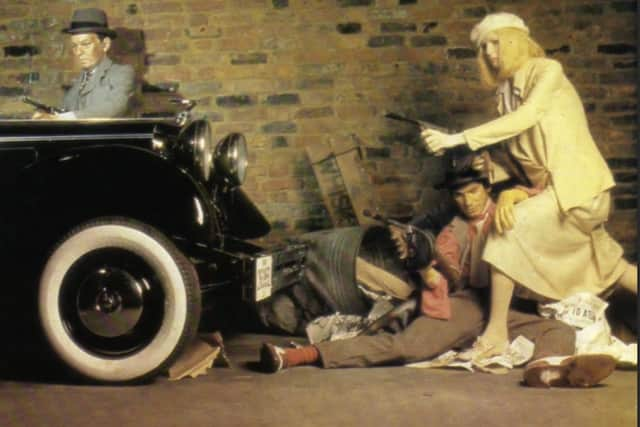
Between the 1970s and 1990s, their creations were also seen in a number of feature and tv films, including the 1978 Dracula (a wax model of Lord Olivier, and one of actor Frank Langella that was used to cut away from the person as the swipe of a shovel transformed him into a bat), Butch and Sundance--The Early Years (1979), Sphinx (1979), Popeye (1979), Outland (1980), stage attraction Barnum (1980), some of which were put on display in Blackpool attractions.
In the early 1990s, after the two had announced a shark attraction for the Yorkshire Coast before the Sea Life Centre was built in Scarborough, they then attempted to start a tourist attraction with the abandoned complex of military fortress establishments in Malta.
But by 1996, Elizabeth, together with her husband and son, had embarked to Spain with a new style of 'Museo De Cera' attraction for Benidorm's Rincon de Loix, though it did not meet with success.
The following year, they embarked upon their last -- The Fort Paull Visitor Centre & Armouries at Kingston-upon-Hull - which took two-and-a-half years to arduously restore and create before launching in summer 2000. It won Best Newcomer To Tourism Award 2002.
After her husband's untimely death at 50, in late 2001, Elizabeth returned to Bridlington and through the conspiring effects of Osteo- and Rheumatoid-Arthritis, kept herself occupied with the creating of replica dolls houses, restoring old furniture, and with knitting and other pasttimes.
Her son, Wes Walker, said:”My mother bestowed Blackpool with many of its waxworks creations and tableaux across the famous marquees of the Golden Mile, and started two attraction ventures of her own there, between the 1970s and 1990s, around the former Bier Keller / Central Pier vicinity.
“She was a well-known figure in the region and frequently returned.”
Elizabeth’s unexpected cause of death was sudden Heart Failure from a very brief illness. She leaves a son, Wes.