
Blackpool man, 59, found dead of heart attack reported chest pains to 111 but GP surgery failed to tell doctor
“There had been missed opportunities to provide more detailed assessment and treatment.”
A patient who died from a heart attack had previously reported he was suffering chest pains to the non-emergency NHS 111 number.
His GP surgery was provided with information about the call, but it was not passed onto his doctor or added to his medical records. Weeks later, 59-year-old Mark Simpson was discovered dead in the bathroom of his Blackpool home.
Enjoy unlimited access to local news, the latest football stories and new puzzles every day
With a digital subscription, you can see fewer ads, enjoy faster load times, and get access to exclusive newsletters and content. Click here to subscribe
Now a complete overhaul has been carried out by practice bosses to prevent any further blunders. And a group representing clinicians has demanded regulations are tightened up following a Prevention of Future Deaths report from senior Fylde Coroner Alan Wilson.


‘Not fully-trained’
Mr Simpson first complained of chest pains in May 2025. And, although an ECG (electrocardiogram) did not raise "significant concerns" at the time, his GP made an urgent referral for a cardiology appointment six to eight weeks later.
Mr Wilson said the referral was triaged by a consultant cardiologist, who had not been fully trained in the correct process, causing "confusion" and the referral was incorrectly viewed as routine rather than urgent.
Mr Simpson's condition did not get worse, but on September 19, at around 4pm, he contacted the NHS 111 service reporting chest pain for seven hours before being advised to call 999 should the pain worsen or he feels breathless.
Mr Simpson didn't inform his family but his GP practice was told but the information was not given to a clinician or added to his medical record at the surgery. At the end of the month, and responding to a request to attend a routine appointment to discuss blood test results, Mr Simpson reported ongoing pains in his chest.
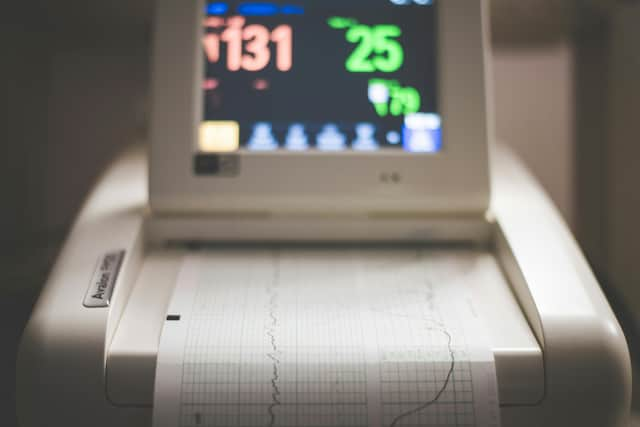
A further ECG was performed, described as "abnormal" and it was recommended a GP review his position.
On October 20, he attended an appointment to discuss diabetes and blood pressure where he told a practice nurse he had suffered more chest pain. The nurse told a GP who said Mr Simpson was awaiting an appointment with a cardiologist and advised he should seek immediate medical help or dial 999 if the pains returned.
Two days later, his partner found him not breathing and unresponsive in the bathroom. A post mortem revealed he had died from the effects of severe heart disease.
Mr Wilson said: "Since reporting chest pain to a GP in May 2025, there had been missed opportunities to provide more detailed assessment and treatment.
“By the time he died, Mark had not seen a cardiologist. Had he been provided with an urgent appointment, from the available evidence, it is likely he would have been referred to an urgent CT coronary angiogram, which may have led to treatment which could have prevented him dying when he did."
The coroner added that the report of Mr Simpson's 999 call was considered at his surgery by a member of staff "who was not medically qualified". He said: "The consultation was not brought to the attention of any GP, including the GP who had initially made an urgent referral to cardiology, a referral which at that time remained outstanding.
"Nor was the report of that consultation incorporated into the medical record for Mark Simpson, meaning that in the event any GP at the practice needed to review his medical record, that GP would be unaware Mark had consulted NHS 111 and reported prolonged chest pain of an estimated seven hours in duration."

Documents to be reviewed by clinicians rather than admin staff
A GP giving evidence at the inquest acknowledged the report of the 111 call should have been immediately included in Mr Simpson's records. Minister of State for Care, Stephen Kinnock, said an in-house investigation had been carried out at the surgery following the coroner's findings.
He said: "The practice has revised its workflow so that all clinical documents received from providers, including NHS 111 and out-of-hours services, are now reviewed by a clinician rather than administrative staff.
"Under the new process, all incoming 111 and out-of-hours documents are attached to the patient record and sent as a clear task directly to a clinician as part of their daily workflow to ensure that all relevant clinical information is reviewed by a member of staff with appropriate medical knowledge.
"The GP practice now ensures that all consultation notes and reports are added to the patient’s medical record. Relevant information will be coded and free-texted into the record by the clinician, ensuring it is easily accessible for review during future contacts without the need to open attached documents.
"The practice will undertake an audit within three to six months to assess the effectiveness of this new process and learning from this work will be shared across GP practices within Lancashire and South Cumbria.
"The practice has also decided to review the process of practice nurses requesting ECGs for patients and consider whether the patient could have been asked to book a GP appointment for a further review, assessment and consideration of an ECG."
‘We are committed to learning’
Responding to the coroner's concerns, Dr Jamie Hynes, vice president of member standards at the Royal College of General Practitioners (RCGP), said: "The RCGP agrees that any report received by a GP practice following an NHS 111 consultation must be added to the patient's medical record.
"This is fundamental to continuity of care and patient safety. A GP reviewing a patient's record must be able to see the full clinical picture, including any recent contact with 111, in order to make appropriate clinical decisions.
"General practice currently holds some of the most advanced electronic health record systems in the NHS. Information received at a practice is ordinarily filed and coded to ensure it remains clinically accessible.
All the latest news and top stories from across Blackpool and the Fylde coast directly to your phone.
Never miss a thing. Click here to join
“The failure identified in this case, where a 111 report was neither routed to the responsible clinician nor added to Mr Simpson's record, represents a breakdown in what should be a routine and mandatory process.
"We are committed to learning from Mr Simpson's death. The RCGP will ensure this case informs our guidance, our communications to members, and our engagement with system partners on the safe handling of clinical correspondence. We would welcome the opportunity to update the Coroner on the outcomes of these actions in due course."