
Lancashire and South Cumbria NHS Foundation Trust to join new pilot scheme to overhaul “fit note” system

Lancashire and South Cumbria NHS Trust will join six other pilot areas to examine ways to end the “tick box exercise” and provide personalised support for people to stay in employment, or return to work if they fall ill.
A health trust covering the Fylde coast and wider Lancashire is to be part of a new pilot scheme designed to overhaul the “fit note” system.
Lancashire and South Cumbria NHS Foundation Trust will join six other pilot areas to examine ways to end the “tick box exercise” and provide personalised support for people to stay in employment, or return to work if they fall ill.
The Trust provides mental health, learning disability, and community physical health services. They have 28 CQC registered locations which provide inpatient and community care, with around 629 inpatient beds across 52 wards, serving a population of around 1.8 million people.
Fylde coast facilities include The Harbour in Blackpool and Wesham Rehabilitation Centre.
The Government said they hope overhauling the “fit note” system will resuly in a boost economic productivity.
Under current arrangements, healthcare staff issue an official medical statement, also known as a sick note or a doctor’s note, which enables people to access sick pay and make benefit claims.
About 11 million fit notes are issued every year in England, with more than nine in 10 confirming the person is not fit for work.
New research has found 29% of primary care staff consider issuing fit notes as a good use of GPs’ time.
The four pilots will cover up to 100,000 appointments and last up to a year, the Government said, with “continuous testing” to establish the most effective approach to tackling the increase in the number of fit notes issued.
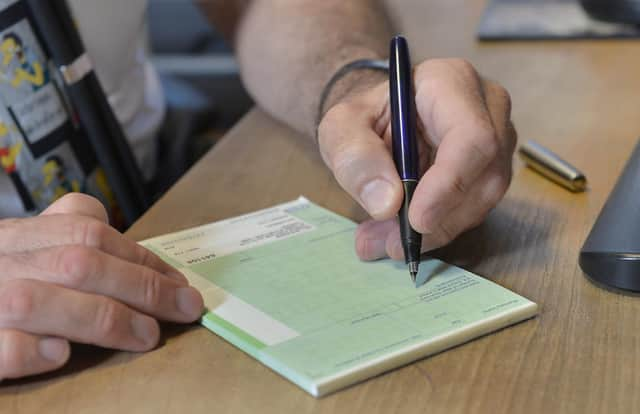

Under the plans, patients are set to be either referred to community health workers after being granted an initial fit note, or not granted a note and supported by a separate service.
The support would include dialogue between patients, employers and health professionals covering “reasonable adjustments and keeping people connected to their workplace”.
The Government said this is the first step of “radical fit note reform”, with patients, healthcare staff and employers providing input ahead of legislation being brought forward for changes to the “broken system”.
Work and Pensions Secretary Pat McFadden said: “Fit notes are too often a dead end – a piece of paper that tells people they can’t work but does nothing to help them get better.
“We’re changing that. By bringing employers, the NHS, and patients together we can help people recover faster, stay connected to their jobs, and get the economy firing on all cylinders.
“That’s what these pilots are about, and that’s what this Government is committed to – fixing what is broken.”
Care minister Stephen Kinnock said NHS staff had repeatedly highlighted that the current fit note system is not working for patients or clinicians who sign them off.
He added: “These pilots mark the beginning of the end for that broken system, giving people personalised support to get back into work and freeing up GPs from unnecessary admin so they can focus on what they do best: caring for their patients.
“This is what our 10 Year Health Plan is all about – earlier support, from the right people, in the right place.”
A Government review last year found there 8.7 million people in the UK with a work-limiting health condition, an increase of 2.5 million in a decade.
The pilots will be launched in Birmingham and Solihull, Coventry and Warwickshire, Cornwall and the Isles of Scilly and Lancashire and South Cumbria.
National Voices, a coalition of health and social care charities, welcomed the pilots and planned reforms.
Chief executive Jacob Lant said: “The current tick-box system for fit notes isn’t working for anyone, particularly patients.
“It makes people who are unwell jump through unnecessary admin hoops, and yet the process rarely offers people the support they need to get well and manage their conditions long-term.
“The Department for Work and Pensions is absolutely right to test out new ways of supporting those who are signed off, and it is vital that patients are fully involved in that testing process, able to feed back over what works and what doesn’t.
“This is the only way to reliably avoid unintended consequences and create a system that actually helps both those who can’t work and those who would be able to with the appropriate support.”