
Blackpool man tells Commons about his homelessness recovery as council outlines strategy to tackle issue
“Blackpool continues to face significantly greater pressure from households facing homelessness than the national average.”
Blackpool is continuing to experience levels of homelessness which is twice the national average, a new report says.
But efforts are being made by both Blackpool Council and other agencies to tackle the issues in a variety of ways, councillors will hear at a meeting next week.
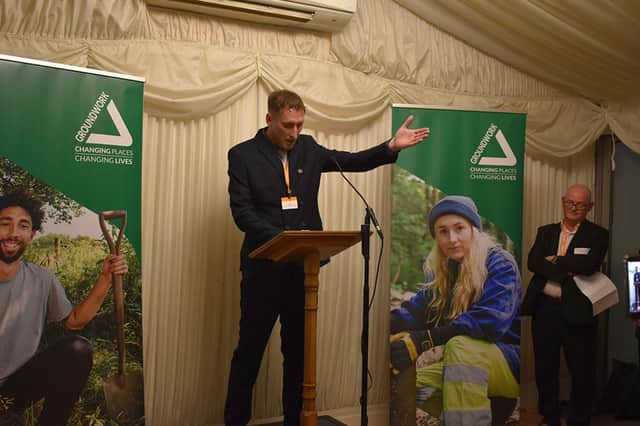
The report, which is to be presented to the Council’s Tourism, Economy and Communities Scrutiny Committee on Wednesday November 18, comes just after a Blackpool man stood in the Houses of Parliament to share his story of recovery and hope after a period of rock-bottom homelessness.
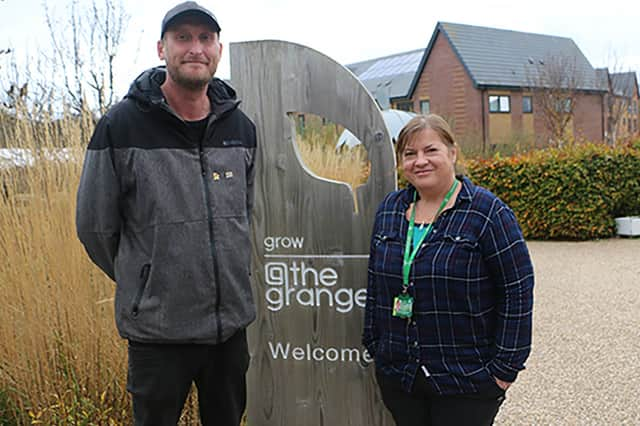

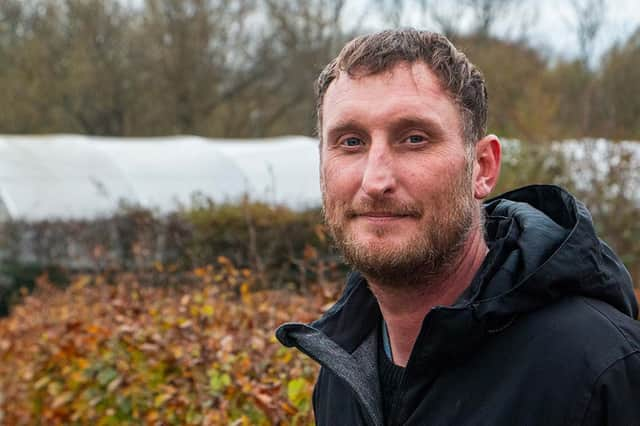
John Sneap, who just two years ago was living in a homeless hostel and struggling with severe mental health challenges, told the House of Commons that he received priceless help from Grow Blackpool, a community garden project which aims to combat social isolation and improve mental and physical well-being.
John, a trained chef who used to be a gardner, has managed to turn his life around, despite facing severe difficulties.
The homeless report, to be presented to the council committee by Kate Aldridge, Director of Strategy, Innovation and Performance, says that presentations of homelessness are still rising in Blackpool, unlike the national average, although that rise is slowing down.
It reveals that in 2025/26, there were 4.4 people per 1,000 households assessed as homeless in Blackpool, compared to 1.89 overall in England, for the same period.
What the report says
The report says: “Blackpool continues to face significantly greater pressure from households facing homelessness than the national average.
“Nationally, homelessness presentations are starting to stabilise and decline. In Blackpool, presentations are still rising, although the rate of increase is slowing.
“Homelessness prevention performance fell in 23/24 as pressure built up in the system, but has since recovered.
“This reflects a deliberate shift back towards prevention and away from crisis responses. Maintaining this shift remains extremely challenging while emergency presentations continue to increase.”
But the report adds: “The Homelessness Strategy also includes a number of local performance indicators. There are no national comparators for these measures, but they indicate that Blackpool continues to perform well against key local priorities despite the significant pressures: - 85% of clients receiving tenancy support maintained a tenancy for 12 months or more.
“Only 7% of homeless clients return to the service within a 12 month period - The average time spent in temporary accommodation remains only 35 days.”
Regarding temporary accommodation,the latest figures showed that 118 households were currently in temporary accommodation, including approximately 40 in B&B. This compares with 100 in 2024/25 and 110 at the end of March 22/23.
Although there has been a slight increase, the figures have remained broadly stable over a 3 year period.
In terms of rough sleeping and winter provision, numbers in Blackpool have remained relatively low since Covid, the report says. Current outreach data, submitted to government monthly, indicates that approximately 15 people are likely to sleep rough on any one night.
Around 30 different individuals are usually found sleeping rough over a month. This rose to almost 50 in August, although an increase during the summer months is not uncommon. Approximately 50 per cent of those seen sleeping rough during the month were new to Blackpool.
What is being done?
The repot says: “Blackpool’s annual winter provision plans are still being finalised with our Homeless Partnership. This year, 12 additional beds are available within existing supported housing provision and can be used flexibly throughout the winter, compared with 10 last year.
“With support from the Homeless Partnership, we hope to offer fixed provision again this year. This would give people experiencing entrenched rough sleeping the opportunity to engage with meaningful support and reduce reliance on B&B.
“Additional funding is available to support the aim of ending rough sleeping. We are working with the Homeless Partnership to ensure this money is used effectively to support this aim. “
The Blackpool Homelessness Strategy 2027 – 2032 is also being developed, against the background the government publishing its new national strategy and guidance for local authorities.
The report says: “We have also completed the local review of the previous strategy. We are now developing the new strategy with the Homelessness Partnership, with the aim of seeking wider consultation in the new year.
The strategy will be based on 5 principles, aligned with the government’s new “five pillars”.
Pillar 1 - Universal Prevention: Tackling the root causes of homelessness; Pillar 2 - Targeted Prevention: Support for people at higher risk of homelessness; Pillar 3 - Preventing Crisis: Helping people stay in their homes; Pillar 4 - Improving Emergency - Responses Improving temporary accommodation and making people’s experiences better if they do become homeless; Pillar 5 - Recovery and Preventing Repeat Homelessness: Ensuring people don’t experience homelessness more than once and halving long term rough sleeping .
John’s experience
A couple of years ago, John Sneap was living in a homeless hostel, struggling with severe mental health challenges and uncertain about what the future held.
Earlier this week, he stood at an event in the Houses of Parliament sharing his story of recovery, resilience and hope.
Enjoy unlimited access to local news, the latest football stories and new puzzles every day
With a digital subscription, you can see fewer ads, enjoy faster load times, and get access to exclusive newsletters and content. Click here to subscribe
Before the pandemic, John had built a successful career as a chef at a Blackpool hotel. However, when COVID restrictions forced the hotel to close, the loss of routine, purpose and employment contributed to a serious decline in his mental health. What followed was a period of addiction, homelessness and a Bipolar Disorder diagnosis that left him needing to rebuild his life from the ground up.
.Through Groundwork's Grow Blackpool programme, he rediscovered his confidence, reconnected with his passion for horticulture and recently secured employment doing work he loves.
John said: “A couple of years ago, I was sitting in a homeless hostel trying to piece my life back together. If you’d told me then that one day I’d be sharing my story in Parliament, I’d never have believed you.
“Before COVID, I was working 12 hour shifts at a big hotel in Blackpool. I looked like I was coping, but in reality, I was masking my struggles with substances and alcohol. When lockdown hit, things spiralled out of control. With the hotel closed, my use of alcohol and substances increased and began earlier each day.
“ I had what I now know was a manic episode and this led to criminal charges and homelessness.I was eventually given a diagnosis of Bipolar Disorder. It wasn’t an excuse but I finally had an explanation. Understanding my diagnosis was one thing but rebuilding my life still felt impossible.
“By late 2025, I hadn’t left my flat for over a year. I was battling severe depression and struggling to look after myself. A social prescriber took me to Grow Blackpool for the first time, but I wasn’t ready. I ran away and didn’t come back.
“Thankfully, people didn’t give up on me. With support from adult social services, I slowly rebuilt my confidence and eventually agreed to give Grow Blackpool another chance.
“Looking back now, agreeing to go back was probably one of the most important decisions I’ve made.
“When I returned to @TheGrange, I met Angela Nagorski who runs the Grow Blackpool programme.
“Angela never pushed me or demanded that I open up. Instead, she gave me the space, patience and encouragement to rediscover what I was good at. She also introduced me to Ellen, a Community Support Worker for Groundwork, whose support has since been a huge part of my recovery journey.
“Before Grow Blackpool, I felt like everything I’d worked for and learned over the years had disappeared. Angela and Ellen helped me realise it was still there. I just needed the confidence to use it again. It was all about getting the right support at the right time.
“When you’ve stopped believing in yourself, having people who don’t give up on you can make all the difference.”
Grow Blackpool is managed and led by horticulturalist Angela Nagorski (Ang), with the project run in partnership with Groundwork CLM (Groundwork Blackpool) based at @The Grange community centre on the Grange Park estate.
For further information visit the Grow Blackpool website.