
Iconic BAE aircraft designed and built in Lancashire which shaped modern Typhoon jets celebrates 40th birthday

“If you are going to fly something like the EAP or the Typhoon, you absolutely have to be on top of your game.”
A pioneering aircraft designed and built in Lancashire that helped shape one of the world's most advanced fighter jets is celebrating the 40th anniversary of its historic maiden flight.
On August 8, 1986, thousands of people gathered at British Aerospace's Warton aerodrome on the banks of the River Ribble to witness the first flight of the Experimental Aircraft Programme (EAP), a technology demonstrator that would prove crucial to the development of the Eurofighter Typhoon.
The aircraft's 67-minute maiden sortie marked a significant milestone for aerospace engineering on the Fylde Coast, showcasing technologies that would later become central to the Typhoon programme, which continues to support thousands of highly skilled jobs across Lancashire.

Among those with a front-row seat for the historic moment was former RAF pilot Chris Yeo, who had spent five years as a test pilot at British Aerospace. Flying a Tornado alongside the EAP, piloted by the company's Head of Flight Operations Dave Eagles, Mr Chris Yeo accompanied the aircraft throughout its first flight.
“It was quite early in the development of the aircraft, so it showed a great deal of confidence,” said Mr Yeo. “We only looped the aircraft on something like Flight Eight of its test programme and did air show manoeuvres, so the aircraft was flying like that very early in its life.
“This aircraft was powerful enough that you could come off the runway, pull it into the vertical and do a vertical roll and it would actually accelerate in the vertical. People talk about the acceleration of a Formula One car, but they do it over a relatively short speed range, these aircraft do it over a big speed range and they don’t back off and slow down.
“If you are going to fly something like the EAP or the Typhoon, you absolutely have to be on top of your game.”
For Chris Yeo and his test pilot colleagues, it was the opportunity to literally write the manual for how to fly the kind of fighter jet we are all familiar with today.
He says: “When you are learning to fly, you get a book which tells you have to fly the aircraft you are learning on, someone else has flown it and they tell you how to do it. With an aircraft like the EAP, no-one can tell you how to fly it, there is no manual. You might have flown it on the simulator rigs, but when you are literally writing the book.
“All the time you were flying the aircraft, you realised it was a one-off, but it was demonstrating this technology. It is hard to relay to someone who has never flown Typhoon or the EAP what a performance step it was and continue to be today.”
With employees lining the runway, the EAP climbed to 30,000ft and reached speeds of Mach 1.1 - faster than the speed of sound.
Just three weeks later, the aircraft made its public debut at the Farnborough Air Show, with Mr Yeo at the controls, giving the rest of the country its first glimpse of the technologies that engineers in Lancashire had spent months developing and testing.
The programme proved a major success. During its flight test campaign, the EAP demonstrated technologies that are estimated to have reduced the Typhoon's development programme by around a year, saving approximately £850 million.
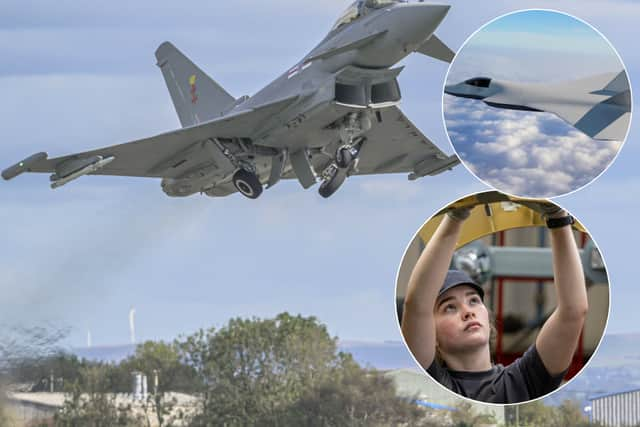
Four decades later, the Eurofighter Typhoon remains the backbone of the Royal Air Force's frontline fleet, standing ready around the clock to protect UK airspace.
Tony Godbold, FCAS Delivery Director at BAE Systems who is leading the project, recently told the Blackpool Gazette: “When I was at school in the 1980s, the EAP was in all the science textbooks and it was inspired me to get involved in the industry and hopefully our aircraft can have a similar effect on the next generation.
“I had the privilege of meeting Chris Yeo recently and when I listened to the stories he recounted from 1986, the parallels with what we are doing now are uncanny. We have not designed a new fast jet aircraft from scratch since EAP, so going back to those first principles with all the new regulations which are in place has been a new challenge.”
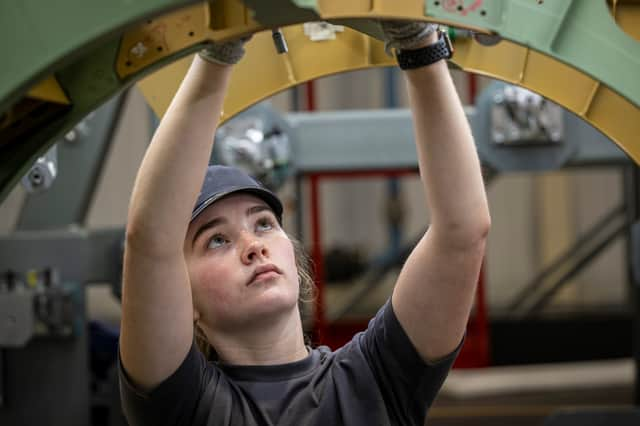
The programme also continues to play a major role in Lancashire's economy, sustaining thousands of jobs and supporting a network of aerospace companies across the county. BAE Systems' Air sector alone welcomed more than 620 new starters in 2026, including many apprentices.
Warton also remains a centre for flight testing as BAE Systems continues developing the latest enhancements for the Typhoon and other aircraft. The legacy of the EAP is also helping shape the future of military aviation.
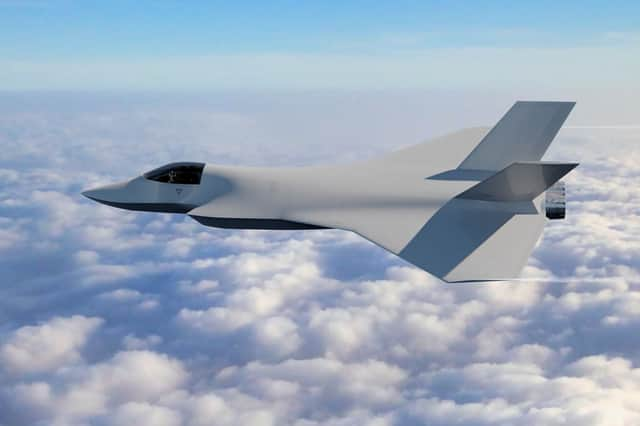
Forty years after the aircraft's first flight, engineers in Lancashire are now working on the Future Combat Air Demonstrator, which is testing the technologies, manufacturing techniques and skills needed for the next generation of combat aircraft.
The demonstrator is being built at BAE Systems' Lancashire sites and is expected to fly by the end of next year. It will support development of the next-generation fighter being created through the Global Combat Air Programme (GCAP), a partnership between the UK, Italy and Japan.
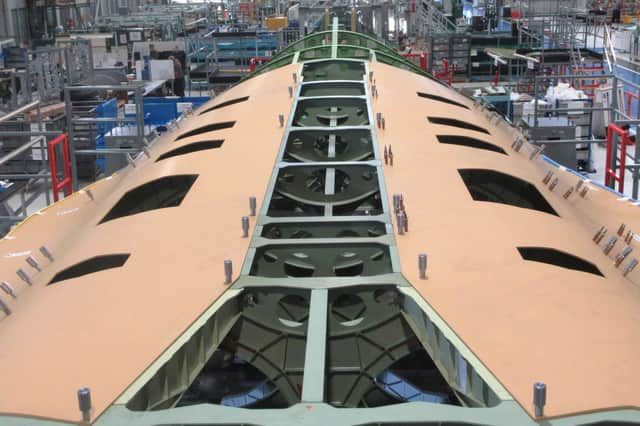
Earlier this month, BAE Systems announced it had designed and started manufacturing 11,500 parts for the demonstrator - around 90% of the aircraft. The front, centre and rear fuselage sections are now in production at Samlesbury, while the wings are being assembled at Warton. The company expects to bring the components together in a final assembly facility at Warton later this year ahead of the aircraft's first flight.
Only one EAP aircraft, serial number ZF534, was ever built. During its test programme it completed 259 sorties, accumulated 195 flying hours and reached a top speed of Mach 2, helping lay the foundations for one of Britain's most important military aircraft programmes.