
Teachers in Blackpool alarmed as ‘humanised AI’ makes spotting fake homework impossible
Blackpool teachers are facing a new challenge in the classroom — AI-generated homework that looks completely human. With the rise of “humanised AI” tools, spotting fake assignments has become nearly impossible.
Teachers across Blackpool are raising serious concerns as a new wave of artificial intelligence tools makes it harder than ever to detect fake student work.
Known as “humanized AI,” these tools rewrite AI-generated content in a way that sounds exactly like a real student.
The issue isn’t a new one. There were tools earlier but their performance wasn’t so good. They tend to give robotic answers or awkward grammar.
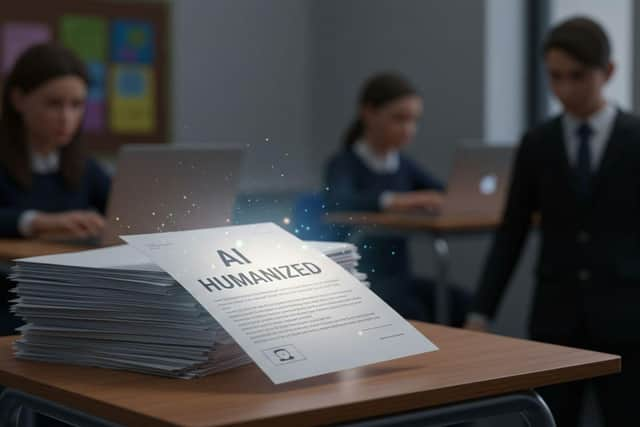

But, AI is growing fast and has started to become intelligent also. AI humanisers are now capable of improving writing tone, structure, spelling mistakes or turn AI content look like human written.
“It’s becoming impossible to tell what’s real and what’s not,” said one secondary school English teacher, who asked to remain anonymous. “Some essays are just too perfect, yet feel strangely lifeless. We’re constantly second-guessing ourselves.”
The rise of these tools comes as more students turn to ChatGPT and similar platforms for help with homework. But now, instead of submitting raw AI text, students are running their answers through apps that “humanize” the content, making it harder to flag using AI detectors.
While tools like AI humanizer and humanize AI text are specifically made for writing assistance. AI is good for students but the use of such tools is raising concerns.

According to staff at Blackpool Sixth Form and several local high schools, there’s been a noticeable change in the quality of homework since the start of this academic year. In many cases, students who previously struggled with writing are suddenly submitting polished, insightful essays — sometimes with little understanding of the material during follow-up discussions.
“It’s like they’ve got ghostwriters,” said another teacher. “We used to worry about plagiarism from other students. Now we’re dealing with something that’s invisible.”
There are currently no official policies in place across most Blackpool schools for dealing with this new type of AI misuse. Teachers say they feel unprepared and unsupported.
Blackpool and The Fylde College confirmed it is reviewing its academic honesty guidelines in light of recent developments. A spokesperson said, “We are aware of evolving technologies and are actively exploring better tools and support systems for staff.”
We discussed this issue with Hamza Haroon and asked for expert commentary. He said: “Right now, it is impossible to detect AI writing with 100% accuracy. AI detectors use the same tech which AI humanizers use. It is good to have such tools but we can’t rely on their findings.”
We further asked, “What can we do to stop use of AI removers”?
He said: “The government can regulate big tech to add watermarks on AI-generated content. We can develop technology to detect AI usage accurately. But again, if someone makes small tweaks or is clever enough, we’ll have no answers.”
Students, meanwhile, are split. Some argue that AI is simply another form of assistance, like calculators or grammar checkers. Others admit it’s a way to cut corners without getting caught.
“I know it’s wrong,” one Year 11 student admitted. “But everyone’s doing it. If the teachers can’t tell, what’s the harm?”
With the line between learning and automation becoming increasingly blurred, Blackpool’s educators are now calling for urgent action — before honest effort becomes a thing of the past.